Home Blog Page 225

60% of Small Businesses Do Not Have a Cybersecurity Policy: Survey

2020 is the “Worst Year on Record” in Terms of Data Breaches: Survey

Social distancing amid COVID-19 has forced millions of businesses to set up remote workstations that rely solely on Web applications and services (SaaS) to conduct business operations.  According to a new survey by the Cyber Readiness Institute (CRI), the virtual workplace has increased cybersecurity concerns for small business owners, as most of them have not implemented remote working policies to address cybersecurity threats.

The survey, which included 412 small business owners, revealed that while most small business owners are concerned about cyberattacks, many  lack the resources to invest in necessary security measures – and  half of them are worried that remote work will lead to more cyberattacks. It revealed that only 40% of small businesses have implemented a cybersecurity policy. Around 40% of businesses stated that economic uncertainty prevents them from making security investments. While 46% have offered training to help their employees stay secure while working remotely.

Nearly 51% of business owners surveyed said they provided employees with technologies to improve cybersecurity for remote work. And 55% of them said they believe federal and state governments should provide funding for cybersecurity products and services.

“These are extremely challenging times for companies, especially small businesses, as revenue and resources are as unpredictable as they have ever been. However, cybersecurity investments aren’t always tied to dollars and cents. Several free tools, that focus on human behavior, offer important guidance on helping small businesses become more cyber ready. The cyber hygiene basics will go a long way in keeping small businesses resilient in this time of increased threats,” said Kiersten Todt, Managing Director of CRI.

How Small Businesses Can Protect Themselves from Cyberattacks

Small Medium Businesses (SMBs) must start taking cyberthreats more seriously, and this starts with education – for business leaders as well as employees. Many SMBs have convinced themselves that they’re incapable of protecting themselves from cyberthreats, but this couldn’t be further from the truth. Not only are there powerful security tools at their disposal – such as data-at-rest encryption and multi-factor authentication – but they’re also capable of turning one of their biggest vulnerabilities into a strength.

Human error is by far the biggest cause of cybersecurity breaches. While this is disconcerting, it’s also empowering – when SMBs make cybersecurity training a top priority, they can drastically reduce their risk without spending tens of thousands of dollars on cutting-edge digital solutions. This isn’t to say technology isn’t an important element of cybersecurity, but it’s always worth remembering that the most advanced piece of hardware on the planet is the human brain.

One in Three SMBs Rely on Free Cybersecurity Tools or Nothing

One in three small businesses with 50 or fewer employees rely on free or consumer-grade cybersecurity tools stated a research commissioned and published by BullGuard. The research also pointed out that one in five companies do not use any endpoint security whatsoever. The research, which surveyed small businesses in the U.K. and the U.S., suggested that nearly 43% SMB owners are not prepared for a potential cyberattack or breach leaving their most sensitive financial, customer, and business data at risk.

1 in 3 Employees Don’t Use VPN to Connect to Company Network While Working from Home: CISO MAG Survey

CISO MAG Survey: With increased digitalization and cloud migration, the corporate network now extends further out into the Internet — beyond the boundaries and firewalls of an organization. Even the concept of WAN and branch offices is extended. Partners, customers, suppliers, and employees connect to the corporate network from remote locations around the globe. Employees are working from home, especially under the prevalent COVID-19 situation, with social distancing becoming a norm. In that sense, it is a borderless network of interconnected networks. That ups the risk quotient for data security, network security, and endpoint security. The threat landscape has broadened to include threats to both, wired and wireless networks.

And then, there’s the “extended” network. Now that employees work from home, CISOs need to ask: How secure are home networks and endpoint devices? How many employees use company VPNs when working from home? With businesses outsourcing more functions to external third-parties, one needs to evaluate the infrastructure security of partners, suppliers, contractors, and the Nth party services (the entire supply chain). That calls for vendor risk assessments and management.

To gauge a deeper insight on the precautions companies are taking to combat the threats looming on the cyberspace, CISO MAG re­cently reached out to all the respondents who participated in the Network Security survey.

The key findings of the snap poll were:

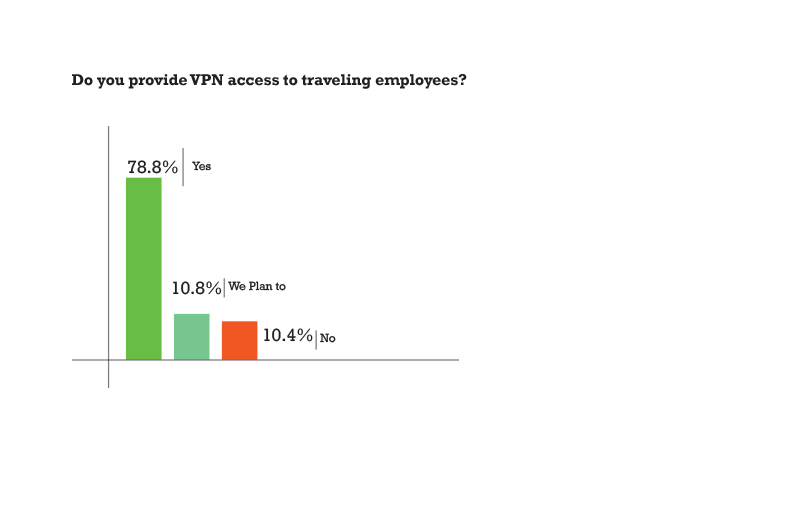
  • Only 70% respondents stated that they were using company VPNs to secure­ly log in to the company network, while 30% did not.
  • Almost all the compa­nies have secured endpoint devices (laptop/ phone) of employees.
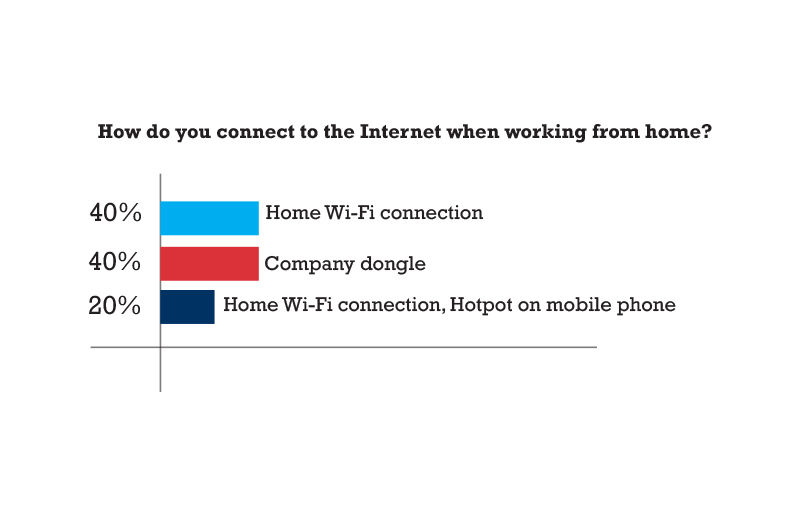
  • Employees connect to the Internet either using home Wi-Fi connections or hotspot on mobile phone, while nearly 25% use company dongles along with home Wi-Fi and phone hotspot.

VPN security at homeWith more and more software as a service (SaaS) models emerging, demand for security has increased at endpoints and even cloud systems.

To validate its research on the usage of network security solutions, CISO MAG conducted a multiple-choice survey, in the month of February 2020. There were 280 respondents for this survey that included CISOs, COO, CSO, Compliance Managers, CIOs, CEOs, data protection managers, Director of IT and others.

CISO MAG Power List Survey

CISO MAG Survey Findings:

  • Even though the adoption of multiple lay­ers of protection is more than 60%, several organizations rely on Antivi­rus and Firewall solutions from vendors at 36%.
  • 6% of respondents suggest using an amalgamation of NAC policies including Identity Awareness, Centralized man­agement and monitoring, and Ease of Deployment
  • 5% companies still believe in some sort of a supervision on machine learning solutions on network traffic analysis
  • When it comes to Perimeter Security, nearly 30% organizations consider se­curing Internet, WAN, LAN, and Cloud together
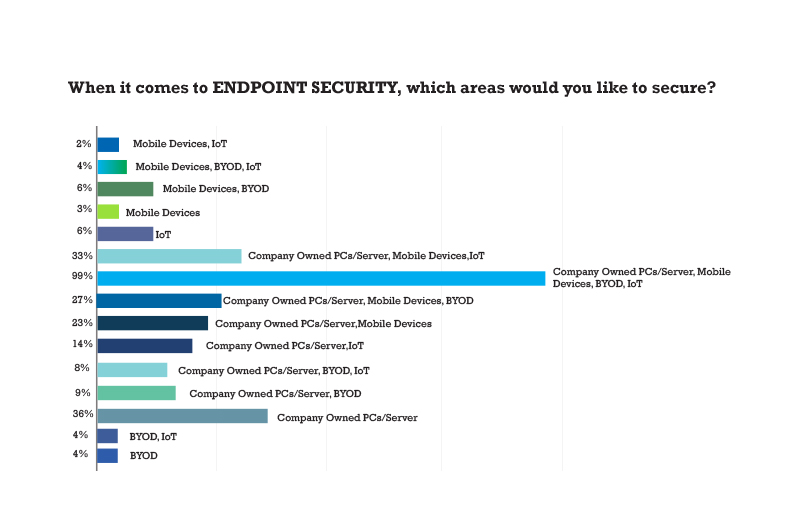
  • 35% of respondents suggest that while se­curing Endpoints the key areas they focus on are Company Owned PCs/Server, Mo­bile Devices, BYOD, and IoT
  • When it comes to intrusion sensors and modules, IPS tops the chart with 22.3% followed by UTM at 18.7% and IDS at 10.8%
  • 7% opt for the hybrid approach for Network Security management 36.6% companies are already using SDN architecture while 63.3% are in the adoption stage
  • 6% organizations still consider data se­curity as the biggest security risk in cloud migration

CISO MAG Power List Network Security

The CISO MAG survey was based on the results of an online survey that was conducted by CISO MAG readers from EC-Council’s database. The respondents represent a cross-section of organizations from over 56 countries ranging from Argentina, Australia, U.S., U.K., Russia, India, France, Germany, Greece, Indonesia, Italy, Jordan, Kenya, Kuwait, Lebanon, Lithuania and even smaller countries and islands like Malawi, Mali, Nauru. Puerto Rico, Rwanda, Togo, Trinidad and Tobago, among several others. The survey was prepared in consultation with security experts and industry analysts.

Find the full survey report at: bit.ly/cisomagfree

Use coupon code CISOMAG19 at checkout for three months of free subscription of CISO MAG

Singapore Ranks Most Prepared in Cybersecurity Readiness: Deloitte

network and ransomware attacks in Singapore, Singapore Ranks Most Prepared in Cybersecurity Readiness: Deloitte

Singapore is well recognized for its technological advancements, especially the way it protects its people and organizations from rising cyberthreats. The government adopted necessary data protection measures and established a data security review committee in order to enhance the data security practices in the country. A recent survey, “Deloitte Cyber Smart Index”, commissioned by VMware, elevated Singapore’s cybersecurity readiness  and revealed that Singapore faced the highest cybersecurity risks in the Asia-Pacific.

According to the survey,  Singapore is the most prepared economy on the Cyber Smart Index, when it comes to cyber exposure and preparedness in the APAC region, with proper legal and organizational awareness. Robust cyber legislation and high rates of R&D are also traits shared by Australia, South Korea, New Zealand, and Japan, which are ranked high on cybersecurity preparedness. Vietnam experienced a high frequency of cyberattacks due to lack of comprehensive legislation to deal with data security. Malaysia is ahead of its peers with a low level of cyber risks exposure, however, it has strong regulatory cooperation and comprehensive privacy measures. Indonesia reported the least cyber risks and is also the least prepared to handle cyberattacks. Australia is the fourth-most exposed and third-most prepared country, by scoring high on cybersecurity education and R&D investment.

The survey stated that the businesses in Singapore are willing to invest more in cybersecurity technology and are confident that cyber risks can be effectively managed. The survey also highlighted that Singapore had rolled out a nationwide security masterplan and also introduced a US$30 million grant to encourage businesses in the country enhance their security measures.

The survey findings are based on the analysis of Deloitte’s cyber consultants who have evaluated the level of cyber risk exposure and readiness across the APAC region, including India, Australia, Japan, Thailand, and the Philippines. The evaluation was based on various components including size of attack surface, frequency of attacks, organization capability to respond to cyber threats, and the level of best practices deployed in the country.

Singapore Introduces New Cybersecurity Labelling Scheme

As part of the Safer Cyberspace Masterplan, the Cyber Security Agency (CSA) of Singapore is set to launch the Cybersecurity Labelling Scheme (CLS). For the time being, CSA extended its rating-based CLS for Wi-Fi routers and IoT devices like smart home hubs. Later this year, CSA will be launching the Safer Cyberspace Masterplan to increase the cyberspace hygiene in the country as it moves towards digitization and achieving the “Smart Nation” tag. The CLS is a first of its kind cybersecurity rating in the APAC region aimed at helping the consumers make informed choices. These cybersecurity labels will act as a scale or measure for the security provisions that a certain product offers.

FBI Warns Organizations About Rising Business Email Compromise

Business Email Compromise Attacks

Organizations that use cloud-based email systems are at high risk to Business Email Compromise (BEC) attacks, according to a new announcement from the FBI. The bureau has warned employees about the email scams that begin with phishing kits designed to mimic two popular cloud-based email services to lure employees into compromising business email accounts and misdirecting funds transfers. The FBI stated that its Internet Crime Complaint Center (IC3) received complaints, between January 2014 and October 2019, claiming more than US$2.1 billion losses from BEC scams.

What is a BEC Attack?

A BEC attack is a sophisticated scam targeting an end-user or a business entity that performs electronic payments like wire transfers or automated clearing house transfers. In a BEC attack, the attackers first steal legitimate business email account credentials, which are later used to launch financial fraud campaigns like fraudulent email messages, requests for out-of-channel funds transfers, and deleted accounting trails.

“Organizations have increasingly moved from on-site email systems to cloud-based email services. Losses from BEC scams overall have increased every year since IC3 began tracking the scam in 2013. BEC scams have been reported in all 50 states and in 177 countries. Small and medium-size organizations, or those with limited IT resources, are most vulnerable to BEC scams because of the costs of robust cyber defense,” FBI said in the statement.

The FBI also issued a list of recommendations to prevent BEC attacks:

For End-Users:

  • Enable multi-factor authentication for all email accounts
  • Verify all payment changes and transactions in person or via a known telephone number
  • Educate employees about BEC scams, including preventative strategies such as how to identify phishing emails and how to respond to suspected compromises

For IT Administrators:

  • Prohibit automatic forwarding of email to external addresses
  • Add an email banner to messages coming from outside your organization
  • Prohibit legacy email protocols, such as POP, IMAP, and SMTP1, which can be used to circumvent multi-factor authentication
  • Ensure changes to mailbox login and settings are logged and retained for at least 90 days
  • Enable alerts for suspicious activity, such as foreign logins
  • Enable security features that block malicious emails, such as anti-phishing and anti-spoofing policies
  • Configure Sender Policy Framework, DomainKeys Identified Mail, and Domain-based Message Authentication Reporting and Conformance to prevent spoofing and validate email
  • Disable legacy account authentication

In its earlier report, “2019 Internet Crime Report”, the (IC3) revealed that hackers secured as much as US$3.5 billion from cybercrimes that were reported to the FBI in 2019. It’s said that the FBI received 467,361 complaints from individuals and businesses during the year and have had nearly five million since the year 2000. The report exposed that a total of 1,707,618 complaints with US$10.2 billion losses were reported in the last five years. It also stressed that phishing and extortion remain the popular ways used by attackers to scam people, while adding that hackers are using sophisticated techniques for their malicious activities, making it harder for security pros to detect.

Maropost’s Leaky Database on Google Cloud Server Exposes 95 Million Email Records

106 million Thailand visitors

Whether it’s accidental or an intentional attack by hackers, database leaks are the worst scenarios for any organization. Apart from lawsuits, data breach incidents trouble the companies in many ways – they impact brand image, cause lost business from clients, a decline in customer base, and lead to potential phishing attacks.

Recently, security researchers at Cybernews discovered an unprotected database, that belongs to marketing automation platform provider Maropost Inc., exposing email records of over 95 million individual customers. The researchers said the exposed database included more than 19 million unique email records belonging to over 10,000 clients, including The New York Post, Hard Rock Cafe Inc., Shopify Inc., Fujifilm Holding Corp., and Mother Jones. The leaky database is hosted on Google Cloud server located in the U.S. The database also included email logs of Maropost’s marketing campaigns.

Soon after the discovery, the researchers notified Maropost about the database leak.  It’s unclear how long the data was exposed online and if any malicious actors have accessed it. However, according to the researchers, the database is now secure and no longer accessible.

Potential Threats from Data Leaks

Maropost’s data leak has threats involved as attackers might take advantage of the sensitive information and could launch targeted phishing attacks, engage in account takeover fraud, or even sell the stolen data on the dark web. Hackers could blackmail Maropost’s clients by threatening to hand over their marketing lists to the competitors,  spam email IDs, or brute-force the passwords of the exposed email addresses.

In its similar breach discovery, CyberNews found an unsecured database comprising of over 800 GB of personal records of more than 200 million Americans. According to the research team, the owner of the unprotected database is untraceable. It’s believed that the exposed data may have originated from the U.S. Census Bureau. Based on the data structure, it’s suspected that the database belonged to a data marketing company or a credit company. The research team stated that they were unable to track the owner of the leaky database and opined that the unidentified party might be an ethical hacker who simply deleted the data to prevent cybercriminals from taking advantage of it.

Three Ways to Recover a Corrupted Excel Document

Excel screen

An Excel Workbook can be the most crucial data repository for many professionals. It could have operational data, customer information, product information, sales data or accounting sheets. Excel is also a popular application for small business owners and entrepreneurs who may have not invested in CRM, ERP or Accounting applications. An Excel workbook is likely to contain number-crunching data and analytics dashboards (Charts) which are a result of hours of diligent work. Excel is also used as a reporting tool and business intelligence or decision support too. But Excel files can occasionally get corrupted. There are tools available to Recover Corrupted Excel Documents. So imagine the reaction when the creator of the Excel workbook is one day greeted with an error message that looks like this:

Recovery Toolbox for Excel, Recover Corrupted Excel Documents

By Victor Bobrov, Recovery Toolbox

It’s a file corruption message and it is likely to happen to anyone, and for various reasons. If the Excel workbook was not backed up early, then the situation is critical as your business depends on the data in this workbook. Hours of work have gone to waste, and you are contemplating if you should begin all over again. But it will take you a long time to recreate that Excel workbook. And I don’t know anyone who has solid insurance for corrupted Excel files.

Don’t panic! There is a way to recover your data. In fact, we’ll show you three methods to Recover Corrupted Excel Documents. But remember, always back up you documents so that you are never caught in this situation again. You will recover most of your data from the back up. So make it a habit to back up daily.

There is a reliable way to fix a damaged document. It is a Recovery Toolbox for Excel application. But before downloading it, I advise you to take a more proactive approach and protect all your other Excel files and documents on disk.

How to Protect Documents on a Disk

Here are the steps to protect an Excel document.

  1. Open the Excel document.
  2. File – Options
  3. Click the Save tab
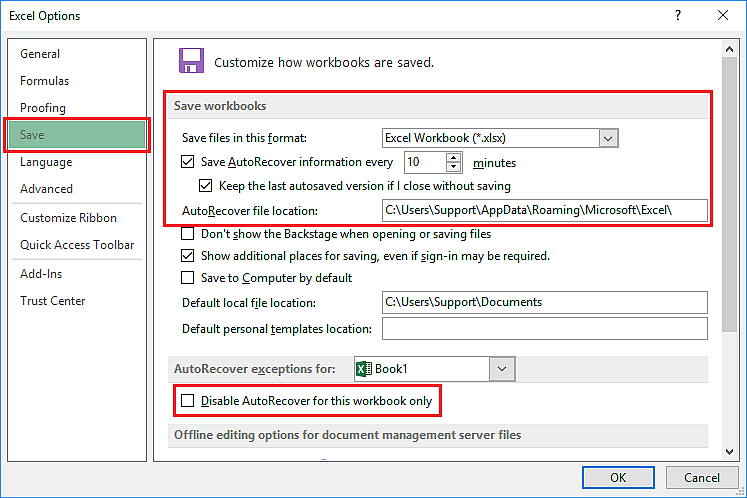
  4. Under Save Workbooks, select Save AutoRecover information every “10” minutes
  5. Also select Save to Computer by default

For older versions of Excel:

  1. Open the Excel document
  2. FileSave as
  3. Go to the Overview—square button
  4. Click on the Service button
  5. Go to the General Settings section
  6. Check the box next to Always keep a backup.

In just a minute, you will always have a backup of the critical file, but do not forget to copy documents to an external storage device such as a hard disk or USB pen drive. You could also backup to the Microsoft Onedrive service and set up a virtual drive folder on your hard disk. Files will be automatically backed up. It is also worth checking the autosave settings in Excel. Ensure that the MS Excel settings match the picture below.
Recovery Toolbox for Excel, Recover Corrupted Excel Documents

Congratulations! You’ve just learned how to protect your work from application or PC crashes, which corrupt Excel workbooks. But what if the document is no longer available?

First, check its size. Right-click on the document—Properties – Size. There’s hope for recovery if the file size is a few hundred kilobytes or preferably several megabytes. The data is intact. But if the file size has shrunk to a couple of tens of kilobytes or less, the information is lost forever. 

Recovery with Standard MS Excel tools

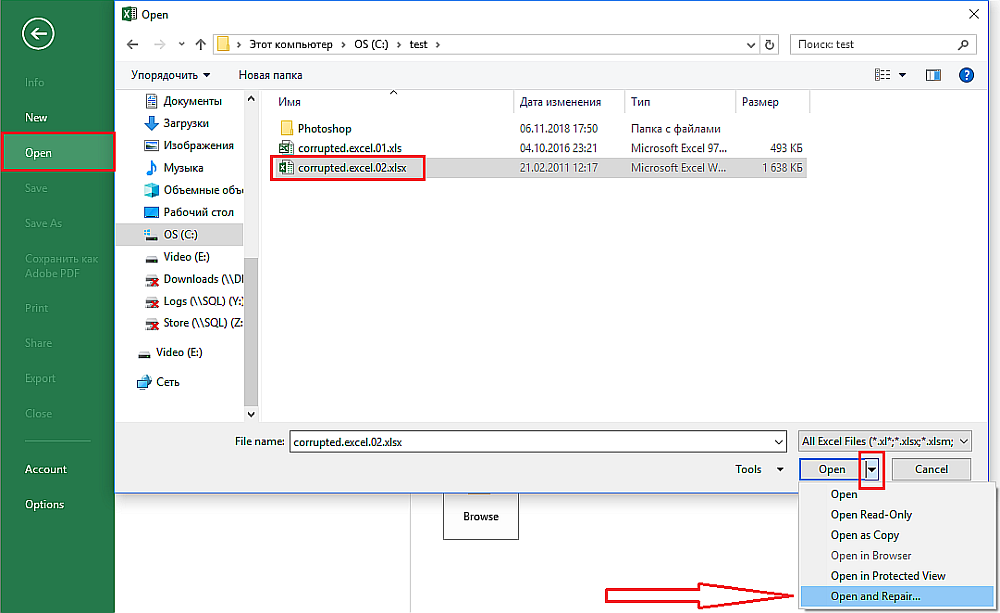
The data on the disk was saved (at least once) so it can be recovered. Not everyone knows that MS Excel has its own auto-recovery tool. But sometimes the tool fails. Therefore, you need to go into Excel settings and run the built-in tool manually:

  1. Go to FileOpen
  2. Select Open Document
  3. Find the file you need in the popup window
  4. Click on the arrow next to Open
  5. Click on Open and Repair

If you use the latest version of Excel, you need to right-click on the file name to see these options.
Recovery Toolbox for Excel, Recover Corrupted Excel Documents

Unfortunately, this built-in recovery feature rarely works. If the file cannot be fixed, instead of the Restore command, press the adjacent key. It is called Extract data. This option will at least return data from lost tables. If it fails again, then move on.

There is a little trick. Sometimes you can open a damaged Excel document with it. Everytime you open an Excel document, the application looks at all the formulas and fields in the document. This function, which in this case prevents the file from being opened, can be disabled. Nothing complicated.

First, create a new document. If you are using the latest version of Excel, click the Formulas tab. In the Formulas ribbon tool bar, look for the option Calculation Options. Click the drop arrow for this feature and select Manual.

With older versions of Excel the command is: Calculations in the book manually.

Then, without closing the active workbook, try to open the document you need using File – Open.

Didn’t work out? It’s okay. It was still worth a try.

The next option is to use third-party recovery tools and services.

Recover corrupted Excel documents online

Try the Online File Repair Service at https://excel.recoverytoolbox.com/online/. It will save you valuable time. Yes, there are many other similar services, but the Online File Repair Service has been a leader in its segment for many years. It offers the lowest cost among competing services.

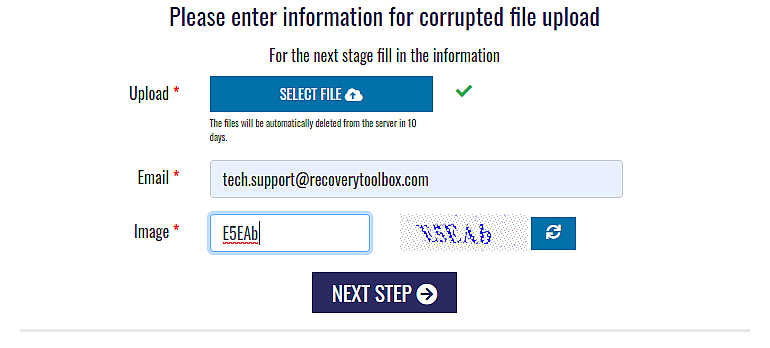
When you visit this site you will see a screen like the one below and will be asked certain details. You will also need to upload your corrupted Excel file.
Recovery Toolbox for Excel, Recover Corrupted Excel Documents

Follow the instructions to recover the file. In the process, you will be required to provide an email address—the recovered document will be sent to that email address. Then upload the file and start the recovery process.

The online service allows you to familiarize yourself with the results in advance, so you will not need to pay if restoration is not possible. The average price is ten dollars for one uploaded file. After payment, you will immediately receive a restored document, and you can open the champagne and start celebrating!

Recovery Toolbox for Excel can recover corrupted Excel documents

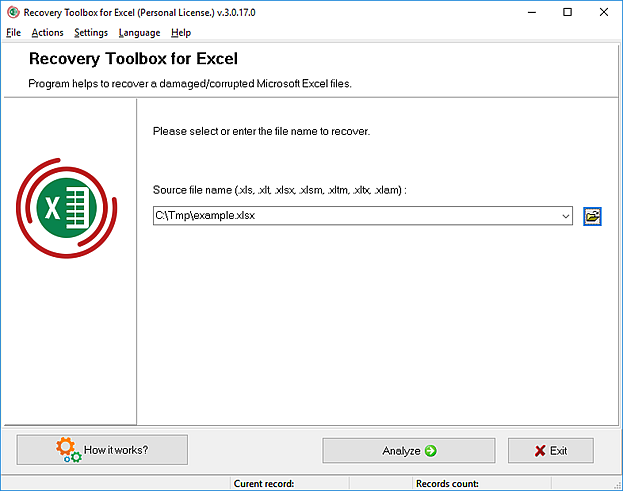
If your corrupted Excel file has sensitive data, then you may have concerns about uploading it to an online service. In that case, you should use the offline tool which you install on your system to Recover Corrupted Excel Documents. It’s called Recovery Toolbox for Excel and is available here: https://excel.recoverytoolbox.com/. Click the Download button.

The tool is a powerful one for repairing damaged Excel files, and it has been available for the past 15 years. So it has practically evolved with Microsoft products. There is a free trial version as well, in case you want to get a feel of the features first.
Recovery Toolbox for Excel

Be sure to test Recovery Toolbox for Excel before purchasing the full version. If you find it useful, then it makes sense to buy a license for the full version. After that, you can upload an unlimited number of Excel files. Plus you get tech support and regular updates.

And before I end, let me remind you about the importance of backing up your documents. Use the auto back up feature and also, make backup copies to external storage media.

For more information visit: https://excel.recoverytoolbox.com

CISO MAG did not evaluate/test the products mentioned in this article, nor does it endorse any of the claims made by the writer. The facts, opinions, and language in the article do not reflect the views of CISO MAG and CISO MAG does not assume any responsibility or liability for the same. CISO MAG does not guarantee the satisfactory performance of the products mentioned in this article.

SPONSORED FEATURE

How the Australian Government is Fighting the War Against COVID-19 Scammers

Cryptocurrency scams in Australia

Australia has seen a sudden surge in cyberattacks amid the COVID-19 pandemic. Cybercriminals are exploiting the situation for their own gain through phishing schemes and malicious activities. Several industry experts stated that remote working increased cyber risks like malware attacks, phishing attacks, and weaponized websites targeted to trick people into opening Coronavirus-related malicious links or attachments.

In order to take control of the cyber situation in the country, the government of Australia launched a cyber offence against offshore cybercriminals. In an official statement, Minister for Defense Linda Reynolds stated that the Australian Signals Directorate (ASD) has mobilized its offensive cyber capabilities to disrupt the cybercriminals behind the spate of Coronavirus-related attacks and malicious activities.

It’s said that cyber experts from ASD are tracking down state and foreign hackers who are targeting Australian households and businesses through devious scams and malicious websites.

Reynolds said, “Cybercriminals that are using the cover of cyberspace and international borders to target Australians are not beyond our reach. We are hitting back through the Australian Signals Directorate, who have already successfully disrupted activities from foreign criminals by disabling their infrastructure and blocking their access to stolen information. Some of these cybercriminals have even posed as health officials in an attempt to exploit vulnerable Australians, by infecting their computers with malware and stealing their private information.”

ASD Director-General, Rachel Noble PSM stated that hackers are using COVID-19-related and other sophisticated threat activities on Australians. She further added that the ASD’s Australian Cyber Security Centre (ACSC) is taking enhanced actions to detect and prevent cyber scams by working closely with Australia’s telecommunications providers and technology giants like Google and Microsoft, to block the websites flagged as malicious.

“Our offensive cyber campaign has only just begun and we will continue to strike back at these cybercriminals operating offshore as they attempt to steal money and data from Australians. Close cooperation with telecommunications and IT companies is vital in providing increased protective barriers for Australians from these heartless cybercriminals,” Noble added.

Coronavirus-Related Malicious Operations

According to ACSC’s threat report, enterprises in Australia have seen a significant increase in COVID-19-themed malicious cyber activities since early March 2020. The Australian Competition and Consumer Commission’s (ACCC) Scamwatch suffered over 100 reports of scams about COVID-19 in the last three months. It’s said that between March 10 and 26, 2020, the ACSC received around 45 cybercrime and security incident reports from individuals and businesses, which are related to COVID-19-themed scam and phishing activities. It’s said that the number of these malicious activities is likely to be much higher, as these numbers only represent those incidents reported to the ACSC and ACCC.

Another Blow to Zoom! Taiwan Government Bans Official Use of Zoom Services

Zoom, video conferencing, webinar, zoom two-factor authentication, top data breaches of 2020

The government of Taiwan announced a ban on the official use of video-conferencing platform Zoom. In an official statement, the Executive Yuan stated that all government agencies and certain non-government organizations are restricted to hold video conferencing calls using Zoom, citing security and privacy concerns. As an alternative, the government recommended agencies to use video conferencing software offered by other companies, like Google and Microsoft.

Chen Chi-mai, Vice Premier and Leader of the Executive Yuan’s overall cybersecurity mission, said, “All organizations introducing information and communication systems should not utilize goods or services that raise data security concerns. In addition, procurement priority should focus on domestically produced goods and services, or those from government-contracted suppliers.”

Many organizations across the globe are relying on Zoom services to hold their video conferences during the COVID-19 pandemic. However, Zoom has been criticized for security issues and cyberattacks.

Taiwan: Not the Only One

Taiwan is not the only one to bar Zoom services. Recently, New York City officials stated that schools in the City will no longer be allowed to use Zoom for online teaching. Australia’s Defense Force and its MPs are also barred from using Zoom services.

Fake Zoom Domains Amid COVID-19

With majority of the employees working remotely, Zoom saw a sudden increase in its popularity.  According to a report from Check Point, hackers are taking advantage of the rise in Zoom usage by registering fake and malicious Zoom domains. The report stated that around 1,700 new Zoom domains have been registered since the pandemic, with 25% of the domains registered in the past seven days alone.

Vulnerabilities in Zoom App

Security researchers claimed that Zoom application is vulnerable to remote attacks. According to cybersecurity expert Mitch@_g0dmode, Zoom’s video conferencing software for Windows is vulnerable to “UNC path injection” flaw that could let hackers steal Windows passwords and execute arbitrary commands on their devices. Soon after the vulnerability was identified, the company fixed the issue by releasing a patch. The CEO of Zoom, Eric Yuan, addressed the security issues and stated that a patch has been released to fix the UNC vulnerability. The fix will be pushed out automatically to all the users.

Fraudster Puts Statue of Unity on Sale to Raise Pandemic Relief Fund

Statue of Unity, India

A fraudster in India tried to pull off a Houdini stunt as he put the world’s tallest statue—The Statue of Unity, located in Kevadia village of Gujarat—up for sale on an e-commerce platform used to sell goods and essentials and thought that he would get away without being noticed. The unknown user placed a price tag of INR 30,000 crores (approximately US$4 billion), which he claimed he would donate towards the state’s relief fund requirements for buying hospitals and healthcare equipment during the ongoing COVID-19 crisis.

The authorities in charge of the monument came to know about the scam when a local news article published the fraud sale findings on the e-commerce platform. They immediately registered a case against the unknown user on the count of cheating and forgery under the Indian Penal Code (IPC) of Epidemic Diseases Act and Information Technology Act.

Cybercrimes and Online Scams Surge in India

Amidst the ongoing COVID-19 pandemic, India’s Cyber Crime Investigation cell has seen a sharp surge in the cybercriminal and online scamming activities. As per a Reuters report, the federal home ministry officials from India said that an 86%  rise in cybercrime has been recorded in the past four weeks itself.

PMO’s Relief Funds

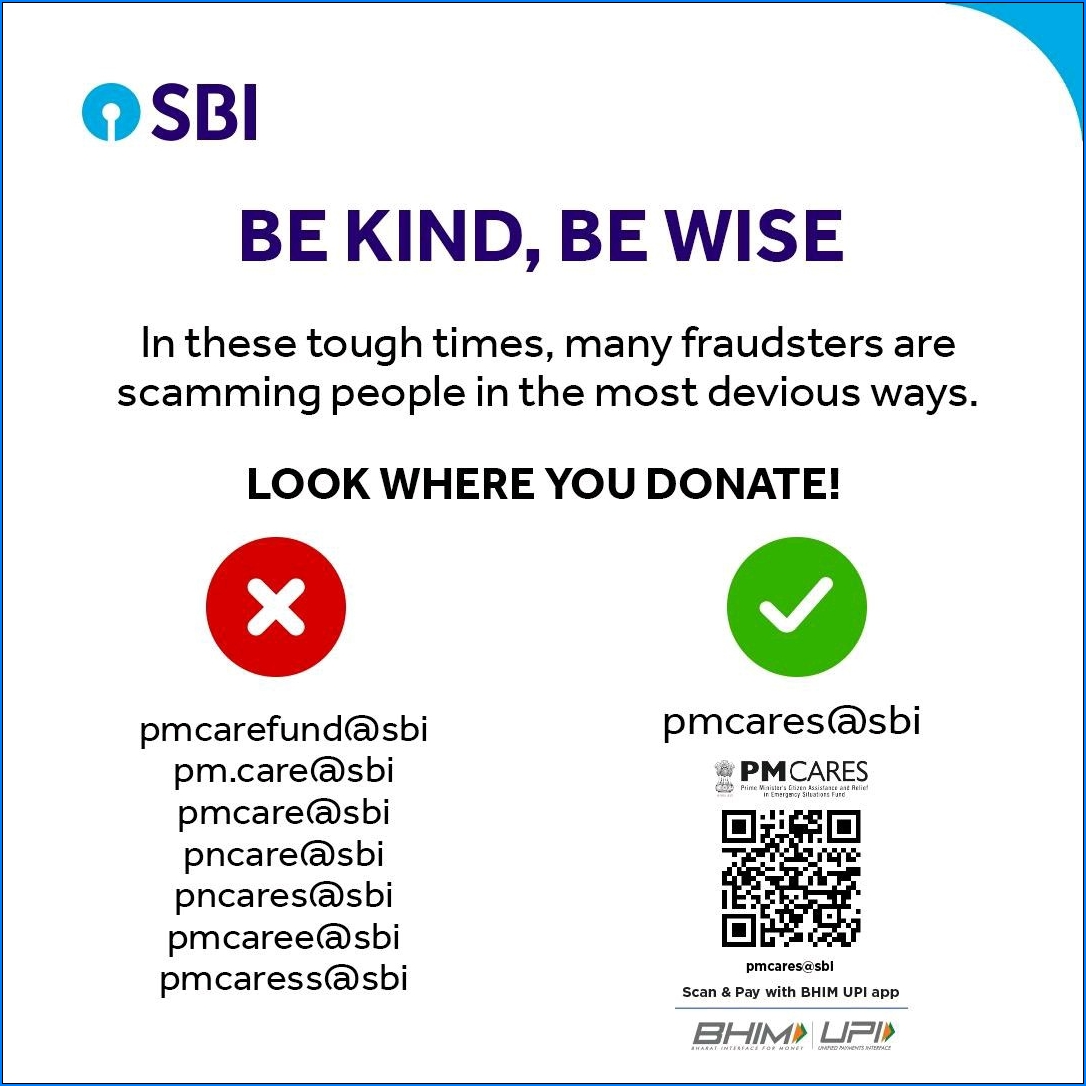
The Prime Minister’s Office (PMO) has set up an online bank account under the name of “PM CARES Fund” and placed the UPI ID “pmcares@sbi” across all its social media handles. This was an appeal to citizens to donate towards the PMO’s relief funds with ease during the total lockdown currently effective in the country. However, scammers also took advantage of this online fund transfer and created an identical looking fake payments interface to dupe people. To protect and educate the citizens of this online scam, State Bank of India (SBI)—with whom the PMO has the original bank account—sent out messages and advertisements across all print and social media platforms as seen below:

SBI warning, SBI online scam warning, online fraud alert
Image Credit: SBI

Even after such efforts from the government and the banking institution alike, more than 8,300 complaints were registered from individuals across India and NRIs from around the globe, who have  donated thousands of dollars into fake accounts.

Earlier, a database of all the active patients, and those who came in direct contact with them from Aythala in Ranni-Pazhavangady panchayat of Kerala, was hacked. The list of confirmed and quarantined patients in the district was handed over to the police and the district health administration to help them in continous monitoring of respective individuals. However, the same list started appearing locally on various social media groups and forums. This was a severe breach of personal data as proposed in India’s Personal Data Protection Bill 2019. According to District Police Chief K. G. Simon, the list wasn’t widely circulated and thus the leak was easier to contain.

BRAC Bank Relies on Trend Micro’s Cybersecurity Solutions to Prevent Advanced Persistent Threats

cybersecurty

Cybersecurity services provider Trend Micro announced that it is providing a comprehensive suite of cybersecurity solutions to BRAC Bank Ltd., a Bangladesh-based bank for small and medium-sized businesses. Trend Micro’s deployment of cybersecurity solutions consists of Trend Micro Apex One, Trend Micro Deep Discovery Inspector and Trend Micro Deep Discovery Analyzer that would help BRAC Bank with automatic shielding from vulnerabilities, malware, and ransomware attacks. The deployment will also help the bank with real-time threat monitoring and protection services for endpoints and networks.

The banking and financial sectors are hit with a constant stream of cyberattacks when compared to other sectors. With banks being a primary target for cybercriminals, BRAC Bank needed an all-inclusive security solution that could protect them against advanced persistent threats like malware infections, zero-day, vulnerability exploits, and targeted phishing attacks via email, SMS, and website.

B. M. Zahid ul Haque, Head of Information Security, BRAC Bank Ltd., said, “Cybersecurity is a top priority at BRAC Bank Ltd. Trend Micro’s security solutions has protected us against advanced malware and ransomware, as well as against new unknown variants as they emerge. The product’s investigative capabilities are extremely advanced and give us a holistic view of endpoints and networks across the organization. As the threat landscape continues to evolve and cybercriminals employ increasingly sophisticated techniques, we need a solution that can also grow and improve our defense against advanced threats and targeted attacks.”

Cyberattacks on Bangladesh Banks

Security researchers discovered that a group of hackers breached multiple banks in Bangladesh. According to the research firm Group-IB, a hacker group named Silence is likely behind the cyberattack on the Dutch Bangla Bank Limited in Bangladesh. The attackers scooped more than US$3 million in an ATM cash-out attack in May 2019. It’s said that the hacker group appears to have deployed a malicious code, named Silence malware, on the bank’s network to run malicious commands on hosts and allegedly used the access to orchestrate fund withdrawals from the bank’s ATMs.