Home Blog Page 133

Indian BFSI Leaders Press for a Hybrid Approach for HSM

Financial services organizations, banks, retailers, insurance providers, and payment application developers are seeing rapid changes in the way they do business. Attack vectors are growing in sophistication, and organizations are increasingly relying on hardware security modules (HSMs) to provide the highest possible security. To address this, CISO MAG recently hosted a closed-door virtual roundtable dubbed, “Gearing for Greatness- The future of India’s BFSI ecosystem with Sachin Y Shende, General Manager, Reserve Bank of India, chairing the discussion.”

The discussion saw several topics like changing dynamics in the hardware security module (HSM) industry, merging of general-purpose and financial HSM technologies, emerging role of cloud key management and cloud financial HSMs, among several others. As General Manager of RBI,    was in-charge of RBI’s Primary Data Centre (Tier IV DC), implemented and managed mission-critical payment systems of national importance (i.e. NEFT, RTGS & SFMS) and various applications as well as critical IT infrastructure. He was instrumental in implementing the information Security Operation Centre (iSOC), a new approach for holistically managing cybersecurity. Shende continually revamped IT infrastructure for better availability and to meet the exponential growth of NEFT / RTGS transactions and played a marquee role in the establishment of RBI private cloud.

The speakers in the roundtable included Ramesh Lakshminarayanan, Group Head – Information Technology and CTO, HDFC Bank; Sankarson Banerjee, Chief Information Officer, RBL Bank; Deepak Sharma, President & Chief Digital Officer, Kotak Mahindra Bank Ltd; Supriya Datta, Senior VP Technology at NSE (National Stock Exchange of India); Manoj Shrivastava, Chief Information Security Officer, Future Generali India Insurance Company; Siba Narayan Panda, a Subject Matter Expert; and Adam Cason, Vice President, Global and Strategic Alliances, Futurex.

HSMs have historically been mandated for applications such as financial acquiring, card issuance, and mobile payment security. In recent years, however, organizations have been using HSMs for even greater numbers of use cases, such as within Cheque Truncation Systems (CTS), Real Time Gross Settlement (RTGS) applications, and tokenization for retailers.

Sachin Y Shende, General Manager, Reserve Bank of India

Shende began the discussion on the adoption of HSMs and asked about which among cloud vs. on-premises was more advisable? Sankarson Banerjee took the lead to explain how his organization has deployed both.

We have both in place. I believe for short-term transactions, it is sensible to have it on cloud, as the encryption is also for a shorter duration. But for long-term projects, it is better that they are hosted on-premises.

Sankarson Banerjee, Chief Information Officer, RBL Bank


Since 2004, HSMs have been active and were deployed for several key projects. But back in the day, cloud wasn’t available. In fact, for the next 5-10 years, cloud was just coming in. And that trend continues for several organizations. Even though the BFSI sector has transformed significantly, many companies have still not adopted HSM on cloud.

Siba Narayan Panda, a Subject Matter Expert

He also noted that several new players have entered the sector and have changed its landscape, but the older ones are continuing with their legacy platforms. According to him, it is paramount for every organization to have a robust security culture.

NSE continues to deploy many functions on-premises, while areas like emails are ones with HSMs on the cloud.

Supriya Datta, Senior VP Technology at NSE (National Stock Exchange of India)


She also pressed for a hybrid approach. Supriya Datta is currently engaged with the National Stock Exchange (NSE) as Senior VP of Technology. Here, she executes the role of a CIO for the Exchange Index and Market Data Business line, Exchange Commodity segment, and NSE IFSC. Additionally, she also leads innovation in blockchain at NSE and is responsible for the identification of possible blockchain use cases along with business, conducts feasibility and proof of concepts, furthering production deployment.

Ramesh Lakshminarayanan spoke about evaluating cloud infrastructure. According to him,You must have all the controls and tenancy even if it is hosted on the cloud.He also advocated that HSM assessment need some standardization.

Ramesh Lakshminarayanan, Group Head – Information Technology and CTO, HDFC Bank


Adam Cason concurred with the idea and added that GP HSM and Payment HSM can be converged into a single infrastructure.

I personally prefer the hybrid approach.” As Vice President, Global and Strategic Alliances at Futurex, Cason works with technology and channel partners worldwide to help them integrate Futurex’s FIPS 140-2 Level 3 and PCI HSM validated hardware security modules and key management solutions into their customers’ enterprise security architecture, in both on-premises and cloud environments.

Adam Cason, Vice President, Global and Strategic Alliances, Futurex


We have everything on-premises. The challenge that comes to my mind is the current key management solution.

Deepak Sharma, President & Chief Digital Officer, Kotak Mahindra Bank Ltd


According to him, even HSM-as-a-service has a lot of scope. Sharma heads Kotak Mahindra Bank’s digital initiatives where he drives digital transformation, business model innovation, and future-ready initiatives of the bank. He is responsible for efficiency, productivity, customer experience, and growth of the business through digital intervention across digital channels, lending, payments, investments, insurance, trade & forex for the Retail, SME, Private Wealth, and Institutional Banking segments.

Manoj Shrivastava continued, There must be guidelines from the government on what should go on cloud and what should stay on-premises.

Manoj Shrivastava, Chief Information Security Officer, Future Generali India Insurance Company


According to him, security challenges even have psychological effects, and cyberattacks can affect the GDP and the economy. Shrivastava is an information and cybersecurity professional and into the Information Technology field for about two decades.

The roundtable also saw discussions on Crypto-as-a-Service – single HSM and key management infrastructure for multiple business applications, and also the impact of COVID-19 on the BFSI Sector.


How to Secure Your Mobile Apps

Mobile Apps Security, mobile apps

Despite multiple security scans, malicious applications make their way into your mobile devices. Most of these unsecured or malicious apps come with several security risks, and cybercriminals often rely on them to compromise and pilfer sensitive information from millions of users. In addition, organizational applications are prone to greater cybersecurity risks as they can provide access to the entire corporate systems and employees’ personal information.

By Rudra Srinivas, Feature Writer, CISO MAG

According to research, there is a nearly 51% surge in the use of spyware and stalkerware globally since the lockdown was announced. Even the FBI issued a warning about threat actors targeting users with fake banking apps to compromise bank accounts. Mobile banking apps witnessed a 50% increase in usage since the beginning of 2020.

Cyberthreats Due to Insecure Mobile Apps

Poor application security can heighten mobile security risks. It is imperative for users and organizations to boost their mobile application security to defend against evolving cyberthreats.

Mobile app security issues can lead to a variety of cyberthreats like:

  • Theft of sensitive data like login credentials and financial details
  • Access to corporate data and networks
  • Lead to SIM jacking/hijacking attacks 
  • Negative impact on an organization’s reputation
  • Impact on millions of users

Need for Mobile App Security

Robust mobile security measures can protect your applications from criminal intrusions and digital frauds. Mobile app security concerns continue to be a cyberthreat. Recently, Google removed 21 malicious Android apps from its Play Store after discovering intrusive adware and Trojans in them. It was found that the fraudulent apps were disguised as gaming apps and contained “HiddenAds Trojan.”  According to a report, 70% of mobile and desktop apps contain open-source security flaws. It was revealed that most of the applications have at least one security flaw, which stems from the use of an open-source library.

4 Factors Affecting Mobile App Security

1. Public Wi-Fi

A secure internet connection is essential when it comes to protecting your mobile applications from cyber risks. Threat actors often target users in a public Wi-Fi network by exploiting flaws in WPA2 encryption. Avoid public internet networks while using critical apps, especially sensitive data involved apps like banking or other financial related apps. Even when accessing your home network, use a Virtual Private Network (VPN) for additional security.

2. Malicious Apps

As mentioned earlier, most of the applications with in-built malicious code escape even robust security checks. The only way to prevent such fraudulent apps from spreading across your mobile phones is by installing apps only from official app stores after thorough research. For more information, read How to Spot Malicious or Fake Apps

3. Outdated OS

Security flaws in operating systems can pose a serious threat to mobile app security. Whether it is a smartphone or any connected device, updating the OS is highly recommended to defend against evolving hacker intrusions. Fix the known and unknown vulnerabilities by applying regular patches and security upgrades as soon as manufacturers release updates.

4. Easy Authorization

The smartness of an app depends on the information that it collects from the user. Weak passwords or the same four-digit code for all the apps puts their security at a high risk. Create a strong authentication process like Two-Factor Authentication (2FA) or Multi-Factor Authentication (MFA) to prevent password guessing attempts and unauthorized intrusions from cybercriminals.

How to Defend?

  • Download only original applications from trusted market places. Look for the Google Play Protect logo.
  • Ensure the data/communication between servers and mobile apps is encrypted.
  • Set-up automatic cached data wiping option.
  • While installing the app, grant access to resources on the phone in a highly discretionary manner (Ask why a particular app needs access to your contacts list or camera).
  • Invest in a paid mobile security app to scan for malware and viruses.

In conclusion

A single vulnerability or malware can cause a severe impact on users’ sensitive data and online identity. Mobile app security is not entirely the manufacturers’ responsibility. End-users must also follow the required security precautions while installing and using mobile applications.


About the Author


Rudra Srinivas is a Feature Writer and part of the editorial team at CISO MAG. He writes news and feature stories on cybersecurity trends.

Effective Security Incident Handling – The Need of the Hour

effective security incident handling, incident response, incident response strategy, incident response playbook,

Today, cyberattacks are getting more complex, precise, and targeted than ever before. Add to this the sheer volume of security alerts and false positives; it is like finding a pin in a haystack. Naturally, the IT teams are suffering burnout, leaving organizations with humongous security and corresponding monetary risks.

According to a recent survey on the Cost of a Data Breach in 2020, the global average cost of a data breach stood at $3.86 million for the current year. These numbers were a shade lower than last year (where the average cost was $3.92 million); however, when it came to the Middle East region, the numbers have nearly doubled ($5.97 million per breach). It is the second-highest only behind the U.S., where the average cost per breach amounts to $8.64 million in monetary losses.

Any scale or level of breach does not just affect your business or clients but also the reputation of your organization, which is the utmost important asset. In a digital economy, facing a security incident, cyberattack, or data breach, is highly inevitable. However, remediating that threat and quick recovery from the aftermath is what counts. It limits the scope of damages that affects the reputation. But how do we do it? Is incident response the answer to it? If yes, then what are the steps for effective security incident handling?

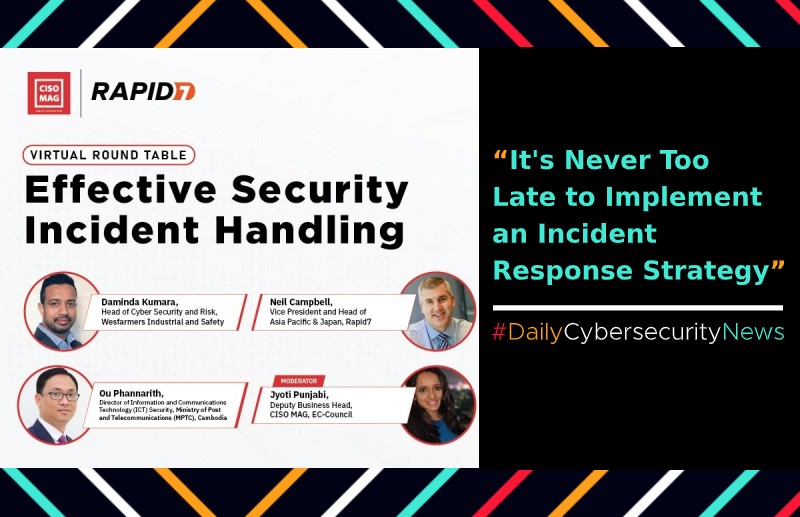
To discuss this, CISO MAG got on board Daminda Kumara, Head of Cyber Security and Risk, Wesfarmers Industrial and Safety; Phannarith Ou, Director of ICT Security, Ministry of Post and Telecommunications, Cambodia; and Neil Campbell, VP and Head of Asia Pacific & Japan, Rapid7; in a virtual round table that was moderated by Jyoti Punjabi, Deputy Business Head, CISO MAG, EC-Council.

The discussion was divided into two parts, where the first half was dedicated to developing a comprehensive incident response plan, whereas in the second part, the panel discussed the post-incident response methodology.

Developing an Incident Response Playbook

Although you cannot control how and when the threat actors target your company, you can always control how you respond. Responding quickly and effectively to cyber incidents can help improve your company’s cyber resilience.

effective security incident handling, incident response, incident response strategy, incident response playbook,

If an organization does not already have an incident response strategy in place then this is a huge problem. This should have been done 10-15 years back.

Daminda Kumara, Head of Cyber Security and Risk, Wesfarmers Industrial and Safety

When asked, “When and where should an organization develop an incident response strategy?,” Daminda Kumara said, If an organization does not already have an incident response strategy in place, then it is a huge problem. They should have designed this 10-15 years ago. Concurring with Kumara, Neil Campbell said, Yes, it should have been there for years, but it’s never too late.

As far as the new or upcoming organizations are concerned, the panel asked them to prioritize cybersecurity and incident response as the top priority. Every organization needs to have an incident response playbook. This playbook will be your go-to for any incident, the panelists said in unison.

However, for creating this playbook, Kumara suggested to seeking inputs from all stakeholders, finance teams, supply chains, admin, HR, etc., highlighting that all departments need to be involved because each department has its own take on what is important, vulnerable, and needs to be protected. Thus, involve as many people as possible, and define every stakeholder’s role in case of an incident.

Campbell added, Have an incident response playbook in a checkpoint format so that it is easier to understand and follow. Also, these checkpoints need to include respective law enforcement and external parties based on the operational domain of your organization.

Another important team that could steer you away from reputational damage in case of incident response is the public relations (PR) team. This team should always be in the loop in case of incident response. Because, as Campbell said, “Communication and PR can either help you or hurt you.” So, take a cue and put PR on the first page of your incident response playbook.

Additionally, have mock incident response drills just like we have fire drills. Run simulations of attacks. Create red and blue teams if required and handle all scenarios of fake cyberattacks. How does this help? It helps create muscle memory. It always keeps you in shape and readiness. It is not just a defensive but a highly proactive approach to cybersecurity, which many do not even consider. It requires analysts to fend off attackers, review the results of their response, and apply lessons learned to avoid a repeat threat.

What Should be a Post Incidence Response

The answer to this question was given in the first part itself – refer to the Incident Response Playbook that you have defined. As said earlier, cyberattacks and breaches are inevitable aspects of the modern digital world. Thus, when they occur, immediately spring into action and start following your playbook.

The priority after any security incident is stopping the spread. For this, you need to depend on your IT team. But if it is beyond their understanding, seek expert help. Hire a third-party technology and cybersecurity partner that can do this for you if you already don’t have it. However, Campbell suggests to choose them wisely. Because you should not go overboard and select the top or the best, this can bore a hole in your pocket. Instead, as Campbell said, choose one according to your needs and industry.

effective security incident handling, incident response, incident response strategy, incident response playbook,

Post incidence Review (PIR) is a good opportunity for learning what went wrong.

Neil Campbell, VP and Head of Asia Pacific & Japan, Rapid7


Once you have taken care of the technical aspect of the incident response, move towards the communications part. Before any other stakeholder is informed, it is mandatory to inform the law enforcement authorities. Various countries have various frameworks in place, which adhere to different timeframes for reporting an incident. The GDPR gives only 72 hours for reporting; however, the ACSC in Australia gives 30 days for reportage. So, know the laws applicable to your geography and adhere to it.

In your incident response playbook, you should have already noted the list of all internal and external stakeholders other than the law enforcement authorities that need to be informed about the incident. Write a letter and inform all of them individually on a personal level. Also, as Phannarith Ou said, “Be honest in your communication.” If it is your mistake, then accept it and tell what remedial measures are being taken to resolve the issue. Maintain transparency at all points of time. Give them an entire blueprint of recovery and issue updates about the ongoing process. This makes them not lose trust in your organization and helps them in retaining confidence.

Campbell pointed out, Honesty and accuracy in your statements are very important in all your incident response communications. Because at some point this communication might be dragged into court and the lawyers will scrutinize every statement that you have made. So do not take that chance. Kumara suggested an added filter for all communications. He said, Get your executive from the incident response team to approve and endorse all communications related to the incident response written by the PR team, so that accuracy is maintained.

effective security incident handling, incident response, incident response strategy, incident response playbook,

For cybercrime framework, look at international best practices. Baseline them and localize them according to your own needs and geography.

Phannarith Ou, Director of ICT Security, Ministry of Post and Telecommunications, Cambodia

At the end of the discussion, a Q&A session was hosted for all curious attendees. One of the most frequently asked questions was if there was a framework that would help create a playbook for comprehensive incident response. Ou delightfully answered this question by saying, For the cybercrime framework, look at international best practices. Baseline them and localize them according to your own needs and geography. Campbell also suggested the attendee to refer ISO/IEC DIS 27035-3(en) standard, which is specially developed for incident response and referred to as a baseline by many global companies.

The session saw a fruitful discussion on effective security incident handling and covered almost all aspects of the pre-and post-incident response, and typically stressed the need of having a well-defined playbook that could be your go-to in times of chaos.

CISO MAG would like to take this opportunity to thank all our panelists and attendees for their valuable time and feedback in making this virtual round table discussion a huge success!

Related News:

The State of Ransomware: From Evolution to Progression

The Evolving Role of Endpoint Detection and Response

Episode #6: How Insurance Fraud is Evolving (and Anti-fraud Measures)

Evolution of Insurance Fraud, BAE Systems Applied Intelligence

Insurance Fraud continues to evolve as it has done for centuries. Fraudsters, too, have evolved their techniques and upped their game. Dennis Toomey, Global Director, Counter Fraud Analytics and Insurance Solutions – BAE Systems Applied Intelligence, talks about the role of technology and the evolution of fraud in the insurance sector. Interestingly, he says there is a convergence of Fraud, Cybersecurity, Risk, and Compliance.

Toomey, with 28 years of international experience, provides top-class consulting on counter fraud analytics and operations to individuals and corporate organizations to help position their companies at the forefront of their industries. He guides them to develop strategic plans to advance their companies’ mission and objectives and to promote revenue, profitability, and growth as an organization.

Toomey says fraudsters are highly adaptive and continually change tactics, strategies, and even modes of operation. In past years, most schemes seemed focused on false auto thefts and property arsons. Fraud schemes today have shifted much more to bodily injuries and suspicious activities by medical providers. Workers’ compensation and auto insurance most notably have seen these changes in tactics. In response, insurers increasingly are adopting advanced analytics to counter the changing nature of the fraudulent activity.

Fraudsters can test system thresholds by filing many different applications online and manipulating rates by changing rating factors to reduce the premium. In addition, analysis suggests that a significant amount of claims fraud is perpetrated through illegally obtained policies. By shifting from a reactive to a more proactive posture, insurers are reducing fraud at policy inception and denying rate evaders a chance to file false claims once the ill-gotten policy is in force.

A growing challenge is rising point-of-sale or underwriting fraud to illicitly reduce premiums, observes Toomey.

Disruptive technology like RPA, AI, and data analytics are helping in curbing or detecting fraud. For instance, the time window for investigations has reduced from five years to one year, thanks to technology.

Europol and European Commission Launch New Decryption Platform to Combat Encryption Misuse

Network Encryption, DSCI Whitepaper on Encryption

Europol and the European Commission jointly launched a new decryption platform to boost Europol’s encryption capabilities during criminal investigations. The innovative decryption platform, controlled by Europol’s European Cybercrime Centre (EC3), was created in collaboration with the European Commission’s Joint Research Centre. The platform allows the authorities to decrypt information that is obtained lawfully in criminal investigations.

The agencies stated that the new platform leverages in-house expertise and includes both software and hardware tools to provide effective assistance to national Member State investigations. EC3 works to reinforce the law enforcement response to cybercrime in the European Union and also focus on diminishing various cybercriminal activities like online fraud, identity thefts, and information misuse, etc.

“The launch of the new decryption platform marks a milestone in the fight against organized crime and terrorism in Europe. In full respect of fundamental rights and without limiting or weakening encryption, this initiative will be available to national law enforcement authorities of all Member States to help keep societies and citizens safe and secure,” the official notice stated.

Ylva Johansson, EU Commissioner for Home Affairs, said, “This decryption platform will help police to investigate terrorism and organized criminality. It will be important in the fight against online child sexual abuse. National police forces can now send lawfully obtained evidence to Europol for decryption.”

The decryption platform is a step towards safeguarding the fundamental rights of the citizens.

Europol’s Executive Director Catherine De Bolle said, “The new Europol Decryption Platform, funded by the European Commission, will allow us to further enhance our support for Member State investigations. This is the result of successful inter-organizational collaboration within the EU and shows the potential for further joint work and support for the EU innovation hub for internal security.”

Minimize COVID-19 Workplace Disruptions, With Help from CISA

COVID-19 cybersecurity lessons

COVID-19 has disrupted today’s workplace for the foreseeable future. Beginning in mid-March 2020, employees transitioned in mass from their onsite offices to a variety of off-site locations. Federal workers are not expected to return to the office almost a year later, and many businesses are still struggling with if and when to bring their employees back onsite. To help address cybersecurity-related issues, the Cybersecurity and Infrastructure Security Agency (CISA), part of the Department of Homeland Security, developed a short guide on teleworking best practices. CISA published the Telework Essentials Toolkit on October 5, 2020.

By Thomas Wolfe, Head of Strategic Development, TalaTek

CISA was established on November 16, 2018, after the Cybersecurity and Infrastructure Security Agency Act of 2018 was signed into law. Its mission is to “address interoperability among the public safety community at all levels of government, foster intergovernmental cooperation, and identify and leverage common synergies.” Its role is to improve cybersecurity across the federal government, increase cybersecurity protections, and coordinate cybersecurity programs with the states. Its programs are applicable to both the public and private sectors.

CISA’s Telework Essentials Toolkit is broken into three sections that target guidance to executive leaders, IT professionals, and teleworkers.

The four strategic areas to help executive leaders drive cybersecurity strategy, investment, and culture are:

  1. Organizational policies and procedures
  2. Cybersecurity training requirements
  3. Moving organizational assets
  4. Cyber secure, hybrid culture

The six technical and tactical areas to help IT professionals develop security awareness and vigilance are:

  1. Patching and vulnerability management
  2. Enterprise cybersecurity controls
  3. Multi-factor authentication
  4. Organizationally approved products
  5. Frequent backup
  6. Domain-based message authentication

The four technical and tactical areas to help teleworkers develop increased security awareness and vigilance are:

  1. Configure and harden
  2. Secure practices and organizational policies
  3. Opening email attachments by clicking links
  4. Communicating suspicious activities

Like any good toolkit, the tools in this resource are designed to be used together to build a secure workplace. Common themes for each group include establishing and following organizational policies and procedures, taking basic security measures, and developing security awareness.

Enacting Organizational Policies and Procedures

All organizations, regardless of size, need to enact clear and consistent cybersecurity policies that employees at every level can follow. The Toolkit addresses this for each group. Executives can find links from organizations such as the National Institute of Standards and Technology and the National Cybersecurity Alliance on driving strategy, development, implementation, updating, and championing cybersecurity and telework policies and procedures.

IT professionals get details on how to implement and monitor these policies and procedures. Links to other CISA resources such as “Guidance on Supplementing Passwords with Multifactor Authentication” can show IT staff how to get started.

Teleworkers are also integral to successful cybersecurity practices and are encouraged to follow organizational policies, practices, and procedures for handling sensitive data (once leadership establishes and communicates them).

Taking Basic Security Measures

Whether remote workers are using company-provided devices or their own laptops, they need to observe and obey basic security measures. And it’s up to company executives to address the secure configuration and updates to those devices in the policies and procedures. CISA makes it clear that both the IT professional and the teleworker must patch, update, configure, and harden the devices they use.  The Toolkit offers links to resources such as “NSA Telework and Mobile Security Guidance” and “Making Your Remote Workforce Cyber Ready.”

IT professionals must execute and maintain the patch and vulnerability management policy to keep organizational hardware and software up to date and continuously scan for vulnerabilities. Links to “CISA Tips and Understanding Patches and Updates” and “GCA Patch to Protect” can show them how.

Teleworkers get how-to help on configuring and hardening their home network by changing the default password to a complex one and reconfiguring routers to use WPA2 or WPA3.

Driving Security Awareness

It can’t be said enough. Hackers and cybercriminals are constantly on the lookout for weaknesses and vulnerabilities. And the human element—remote employees working on home networks—are an organization’s weakest link. So it’s vital to cultivate a culture of cyber awareness and vigilance and to include security training for employees at every level. The Toolkit provides resources to develop such programs. Executive leaders can find links to the “Cyber Readiness Institute Cyber Readiness Program” and “Creating a Cyber Ready Culture in Your Remote Workforce: Five Tips.”

Tips for IT professionals include keeping up to date on new cybersecurity controls such as zero-trust architecture and new collaboration and teleconferencing tools.

Teleworkers get information warning them of the dangers of opening email attachments and clicking links as well as advice on communicating suspicious activities to company leadership.

The Telework Toolkit also includes additional resources, including the Global Cyber Alliance’s Cybersecurity Toolkit for Small Businesses, and links to additional CISA guidance for all three levels.

This is not CISA’s first foray into teleworking safety. CISA has provided many additional teleworking resources and guidance since the coronavirus has changed the landscape of how and where people work. These include General Teleworking Guidance, VPR Related Guidance, Video Conferencing Guidance, and Wireless Related Guidance.

With a COVID-19 resurgence predicted for this winter and no end in sight, CISA’s Teleworking Toolkit comes at a vital time for many organizations that are unsure of how to navigate the waters.


About the Author

Thomas WolfeThomas Wolfe has more than a decade of business development, project management, technical writing, and editing; he has proposal writing and management experience in the public and private sectors. In his business development and proposal writing/management capacity, Thomas has been instrumental in winning awards with a combined amount of more than $100M. In his technical writing, editing, and project management capacities, Thomas has supported such federal agencies as the Federal Aviation Administration, General Services Administration, Department of Homeland Security, and Department of Education, among others. Thomas graduated from West Virginia University with a major in English, Professional Writing, and Editing. Thomas’ personal pursuits include reading, collecting vinyl records, and hiking the Appalachian Trail, with a goal of hiking the AT from Harpers Ferry National Historic Park in West Virginia to Grayson Highlands State Park in Virginia (509 miles).


Disclaimer

Views expressed in this article are personal. The facts, opinions, and language in the article do not reflect the views of CISO MAG and CISO MAG does not assume any responsibility or liability for the same.


Related stories:

The Underbelly of COVID-19: Malware and Ransomware Ramp Up

COVID-19 Pandemic is a Silver Lining for Cybersecurity

What Edward Snowden Taught Us About Insider Threats

Insider Threats

We all know the name, Edward Snowden. Variously described as a whistleblower, hero, or even a traitor, in the security community, he is what is known as an ‘insider threat.’ With Snowden and his wife recently seeking dual citizenship in Russia and the U.S., his story has been brought back into the spotlight, offering an opportunity to reflect on what his actions taught the world, and particularly cybersecurity professionals, about the danger of both malicious and unintentional insider risks.


By Trevor Daughney, VP, Product Marketing, Exabeam

A former contractor to the CIA, in 2013 Snowden copied and released thousands of classified documents to journalists, many relating to secret and controversial government surveillance activities in the U.S. and abroad. As details were gradually released in the media during subsequent months, the scandal surrounding Snowden grew, and having fled to Moscow, he has been living in Russia since, the subject of ongoing criminal charges from the U.S. government.

The Complex Nature of Insider Threats

Snowden’s story is just one example of the potential risk posed by insider threats. But his activities, while being the highest-profile, are by no means typical of the scenarios faced by most organizations, particularly in the commercial context.

In most cases, insider threats will take three key forms. The “compromised” insider is considered by many to be the most problematic because this person has generally done nothing but innocently click on a link or input a password. This is often the result of phishing campaigns, which present users with a link to an authentic-looking website to convince them to input login credentials or other sensitive data.

As the name suggests, the “malicious” insider is typically an employee or contractor who steals information for financial gain or seeks to disrupt or damage an organization to hurt, punish, or embarrass it. The various Apple engineers who were charged with data theft for stealing driverless car secrets for a China-based company are just one of many examples.

And alternatively, but no less dangerous, is the “accidental” or “negligent” insider. This can be particularly challenging, because irrespective of how much care organizations and employees take over cybersecurity, mistakes happen. Something as simple as an employee leaving a workstation unlocked in a shared area could result in a data breach. Accidental incidents can even happen to executives — for example, a CEO might not even think twice about sending sensitive information to their personal account to work on over the weekend. The point is, no one is immune from the risks associated with insider threats, so the way organizations approach these various challenges is central to their safety.

These are far from isolated risks. According to the Information Risk Research Team at Gartner, for example, insider threats account for 50-70% of all security incidents, and for security breaches specifically, insiders are responsible for three-quarters of them. The consequences can be severe, with the Ponemon Institute estimating that insider threats cost $8.76 million per year per affected company. This is not least because it takes an average of 280 days to identify and contain each breach — a frightening scenario for any organization to face. Unfortunately, the cost is only increasing with each passing year. From 2018 to 2019, the cost of a single malicious insider attack increased by 15%, from $1.4 million in 2018 to $1.6 million in 2019.

Protection and Mitigation

One of the biggest issues when it comes to insider threats is that they can be very hard to predict, let alone mitigate. If an outsider is trying to get around a firewall, for example, software and security protocols can be employed to prevent it. However, most traditional cybersecurity solutions don’t turn that focus inwards to reveal what happens within the organization.

While increasing awareness about insider threats has helped organizations address some of the core risks, there remain a series of steps that many still don’t apply as rigorously as they should. The first is simple: invest in training. Without a doubt, some accidental and compromised insider attacks can be prevented by simply training end-users on spotting and avoiding phishing attempts.

Next, focus on user behaviors. Most security protocols can benefit from user and entity behavior analytics (UEBA), and by understanding typical behaviors, security teams can more easily detect when a problem occurs. And thirdly, organizations should arm themselves with the technology infrastructure and tools to see the whole picture and address the layered challenge of insider threats. Systems powered by artificial intelligence and machine learning are now used by organizations around the world as the foundation for effective, proactive protection, with security information and event management (SIEM) systems one example of how these technologies are being applied to the risks posed by human error, negligence, and malicious insiders.

In the current climate of uncertainty and risk, organizations that can double down on their approach to insider threats will be better placed to protect their employees, systems, and data in the long term. A proactive strategy that blends technology and training can eliminate the insider threat blindspots that still pose a major risk across millions of organizations today.


About the Author

Trevor DaughneyTrevor Daughney is Vice President of Product Marketing at Exabeam. Trevor is a marketing executive with a track record of building high performing teams to take enterprise cybersecurity SaaS and software technology and turn them into successful global businesses. Prior to Exabeam, he led enterprise product marketing at McAfee, Ping Identity, and Symantec. Trevor approaches marketing with a global mindset and builds on his experiences living and working in the US, Canada, and Asia. He has an MBA from the University of California, Berkeley.

Disclaimer

Views expressed in this article are personal. The facts, opinions, and language in the article do not reflect the views of CISO MAG and CISO MAG does not assume any responsibility or liability for the same.


Related story: Insider Threats: A Byproduct of the New Normal

After U.S., Vietnam Government Suffers Supply Chain Attack

Vietnam

Security researchers identified a supply-chain attack targeting the Vietnam Government Certification Authority (VGCA) that compromised the agency’s digital signature toolkit. According to an investigation from the security firm ESET, cybercriminals exploited the software installers hosted on the VGCA’s website “ca.gov.vn” to inject spyware known as PhantomNet or Smanager.

The Vietnamese government has mandated the use of digital signatures and digitally signed documents. The VGCA is the authorized certificate provider. It also develops and distributes a digital signature toolkit and offers cryptographic certificates used to sign documents.

The “SignSight” Attack

The researchers named the cyber operation as SignSight attack, which occurred from July 23 to August 16, 2020. ESET researchers stated that cybercriminals modified two software installers, “gca01-client-v2-x32-8.3.msi” and “gca01-client-v2-x64-8.3.msi” for 32-bit and 64-bit Windows systems, which are available for download on the agency’s website. Attackers manipulated the software and added a backdoor to compromise users of the legitimate application.

“We were able to confirm that those installers were downloaded from ca.gov.vn over the HTTPS protocol, so we believe it is unlikely to be a man-in-the-middle attack,” ESET researchers said.

The URLs that redirected the users to malicious installers include:

https://ca.gov[.]vn/documents/20182/6768590/gca01-client-v2-x64-8.3.msi

https://ca.gov[.]vn/documents/20182/6768590/gca01-client-v2-x32-8.3.msi

PhantomNet Supply-Chain Attack

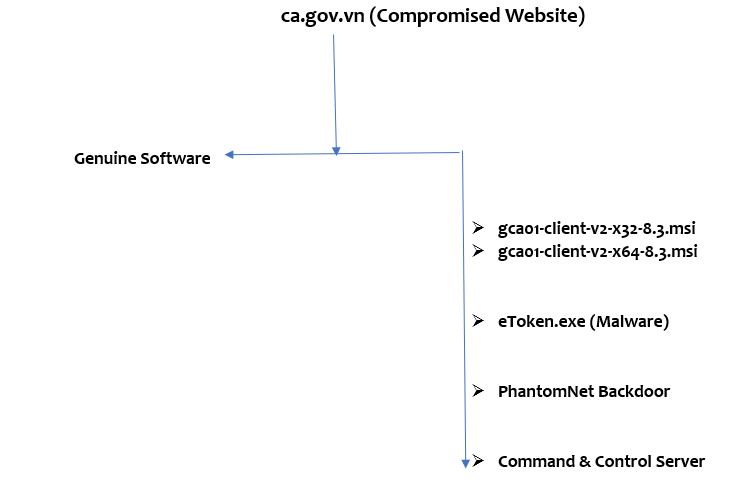
The users could get affected by PhantomNet spyware if the compromised software hosted on the official website is downloaded and installed on the targeted system. Once installed, the altered software hides its malware and runs the PhantomNet backdoor that tricks users as a regular file named “eToken.exe.”

The Attack Flow                                              

“We believe that the website has not been delivering compromised software installers as of the end of August 2020 and ESET telemetry data does not indicate the compromised installers being distributed anywhere else. The Vietnam Government Certification Authority confirmed that they were aware of the attack before our notification and that they notified the users who downloaded the Trojanized software,” the ESET researchers added.

SolarWinds Hack Affected Yet Another Tech Giant – Microsoft

Microsoft Affected in SolarWinds Hack

The SolarWinds Orion IT management software hack is now acting like a tornado, sucking up everything and growing larger with every passing moment. SolarWinds, in its SEC filing, acknowledged that nearly 18,000 of its customers were affected in their software hack and that they were all notified about it. However, no customer names were disclosed, and it took down the client list post the disclosure of the hack. But five days after the official notification, Microsoft has now accepted that they were hacked. It is probably one of the reasons why they partnered with FireEye to create a Killswitch for stopping the Sunburst malware in the first place.

Related News:

Microsoft and FireEye Create a “Killswitch” for Sunburst Malware Affecting SolarWinds’ Orion

Microsoft Feels the Ripples of SolarWinds Hack

The U.S. National Security Agency (NSA), on Thursday, issued a “cybersecurity advisory” describing how threat actors were leveraging the abused authentication mechanisms for disrupting Microsoft Azure cloud services. It directed users to lock down their systems and observe the remedial measures as prescribed by Microsoft.

However, this was just the tip of the iceberg. The actual impact was to be known only a day later when Microsoft said, “Like other SolarWinds customers, we have been actively looking for indicators of this actor and can confirm that we detected malicious SolarWinds binaries in our environment, which we isolated and removed.” The spokesperson who issued this statement also added that there were no traces of the hackers further using their compromised systems to move parallelly. Sources have suggested that Microsoft’s cloud services have been extensively used by hackers to scroll through new potential targets while the mainframe remains untouched.

Related News:

U.S. Government Takes the Wind Out of SolarWinds’ Sails…for the Time Being!

The Affected Parties

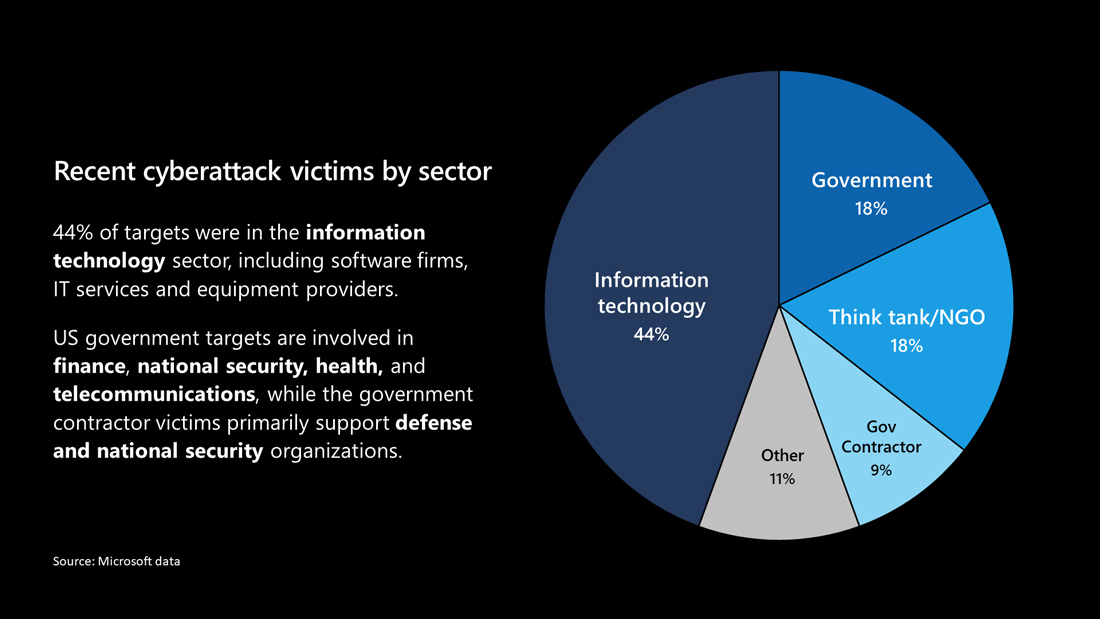
The investigation of the hack has been ongoing, and the list seems to be getting appended with a new name every passing moment. But Microsoft seems to have answers to what geo targets and the industries were most affected by the SolarWinds hack.

Microsoft President Brad Smith, in a blog post, stated that 80% of the targets were from the U.S.; however, threat actors also targeted seven other nations – Belgium, Canada, Israel, Mexico, Spain, and the United Arab Emirates. He further noted that since the investigation is still on, this list could get bigger.

Microsoft has also shared the list of sectors that were affected by the SolarWinds hack based on the data gathered from Microsoft’s Defender Anti-Virus software. This list not only includes the IT and Governmental sector but also non-governmental organizations and think tanks, which is rather surprising.

Microsoft affected in SolarWinds Hack

At the end of the blog, Brad Smith said something that is the need of the hour:

This is a third and final sobering development worth noting from what has obviously been a challenging year. This comes from the intersection between cyberattacks and COVID-19 itself.


We live in a more dangerous world, and it requires a stronger and more coordinated response.


A more effective strategy as we enter a new year.


Put simply, we need a more effective national and global strategy to protect against cyberattacks. It will need multiple parts, but perhaps most important, it must start with the recognition that governments and the tech sector will need to act together.

Related News:

White House Confirms Cyberattack on U.S. Dept of Treasury and Commerce

Are You a Thought Leader CISO? [INFOGRAPHIC]

1 in 3 CISOs feel biggest challenge of endpoint solution is its complexity

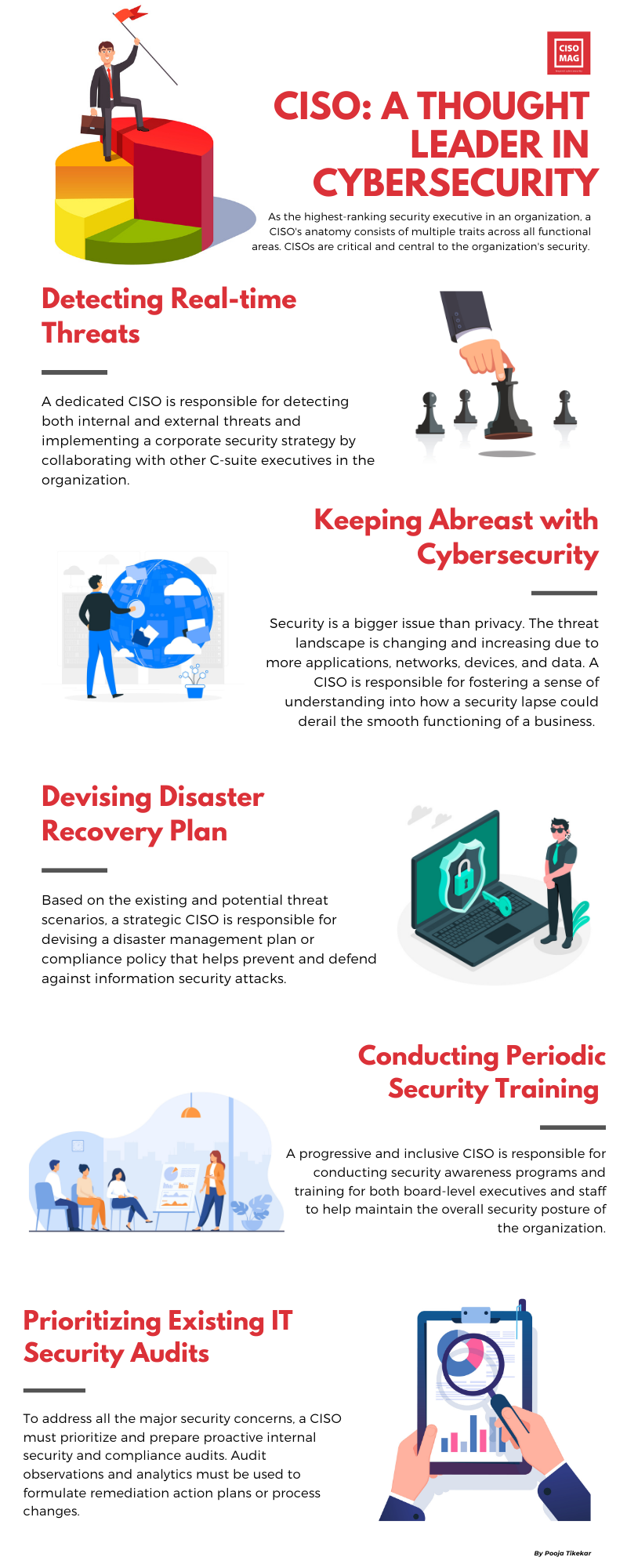
Information security is a growing concern for small and big businesses alike. While we do everything we can in our power to protect the enterprise, Chief Information Security Officers or CISOs will always be central to security. A CISO is a thought leader with the technical know-how of risk-free business operations. He is tasked with multiple responsibilities, and in the present times – when everyone is working remotely – CISOs have been crucial in ensuring seamless business continuity.

Here are the key traits of a thought leader CISO:

CISO_ A Thought Leader


Read CISO MAG to learn about CISO strategies and best cybersecurity practices. Get all the 2020 Editions here. Subscribe now!

About the Author

Pooja Tikekar is a Feature Writer and part of the editorial team at CISO MAG. She writes news reports and feature articles on cybersecurity technologies and trends.

More from the author.