Home Blog Page 46

Federal Authorities Release Advisory Detailing BlackMatter Ransomware

network security, BlackMatter ransomware, privilege

In tandem with cyberattacks, the emergence of various cybercriminal groups has become rampant in recent times. Several governments across the globe are initiating advanced security measures to cope with evolving threat actor groups. Recently, the Cybersecurity and Infrastructure Security Agency (CISA), the National Security Agency (NSA), and the FBI jointly released a cybersecurity advisory about the infamous BlackMatter ransomware group, with information on its tactics, techniques, and procedures (TTPs).

BlackMatter Ransomware

Active since July 2021, BlackMatter is a ransomware-as-a-service (Raas) that enables threat actors and cybercriminal affiliates to deploy ransomware on targeted victim’s devices. BlackMatter operators have targeted several critical infrastructures in the U.S. and have demanded ransom payments ranging from $80,000 to $15,000,000 in Bitcoin and Monero. The group also leveraged embedded and previously compromised credentials to illicitly access the Active Directory (AD) to discover all hosts on the targeted network.

The operators recently compromised and infected NEW’s network systems and demanded a ransom of $5.9 million to restore the affected systems.  The attack affected the operations of several grain storage elevators and farming activities, causing severe disruption to the food supply chain.

How to Detect BlackMatter Ransomware

The advisory unveiled two Snort signatures that help detect network activities linked with BlackMatter.

  1. Intrusion Detection System Rule:

alert tcp any any -> any 445 (msg:”BlackMatter remote encryption attempt”; content:”|01 00 00 00 00 00 05 00 01 00|”; content:”|2e 00 52 00 45 00 41 00 44 00 4d 00 45 00 2e 00 74 00|”; distance:100; detection_filter: track by_src, count 4, seconds 1; priority:1; sid:11111111111;)

  1. Inline Intrusion Prevention System Rule:

alert tcp any any -> any 445 (msg:”BlackMatter remote encryption attempt”; content:”|01 00 00 00 00 00 05 00 01 00|”; content:”|2e 00 52 00 45 00 41 00 44 00 4d 00 45 00 2e 00 74 00|”; distance:100; priority:1; sid:10000001;) rate_filter gen_id 1, sig_id 10000001, track by_src, count 4, seconds 1, new_action reject, timeout 86400

Responding to Ransomware Attacks

In case of a ransomware incident, the federal agencies recommended organizations to:

  • Follow the Ransomware Response Checklist in the CISA-Multi-State Information Sharing and Analysis Center (MS-ISAC) Joint Ransomware Guide.
  • Scan backups with an antivirus program to check that it is free of malware.
  • Report incidents immediately to the FBI at a local FBI Field Office, CISA at uscert.cisa.gov/report, or the U.S. Secret Service at a U.S. Secret Service Field Office.
  • Apply incident response best practices found in the joint Advisory, Technical Approaches to Uncovering and Remediating Malicious Activity, developed by CISA and the cybersecurity authorities of Australia, Canada, New Zealand, and the U.K.

 Mitigating BlackMatter

The agencies urged security admins and organizations, especially in the critical infrastructure sector, to apply the following mitigation measures and reduce the risk of compromise by BlackMatter ransomware:

  • Implement the detection signatures identified
  • Enable multi-factor authentication to all services to the extent possible, particularly for webmail, virtual private networks, and accounts that access critical systems
  • Keep all operating systems and software up to date
  • Remove unnecessary access to administrative shares
  • Implement Network Segmentation and Traversal Monitoring
  • Enforce Backup and Restoration Policies and Procedures

“Ransomware attacks against critical infrastructure entities could directly affect consumer access to critical infrastructure services; therefore, CISA, the FBI, and NSA urge all organizations, including critical infrastructure organizations, to implement the recommendations listed in the Mitigations section of this joint advisory. These mitigations will help organizations reduce the risk of compromise from BlackMatter ransomware attacks,” the advisory stated.

Sinclair Broadcast Group Network Encrypted with Ransomware — Operations Disrupted

Ransomware attacks, ransomware, Sinclair Broadcast group

In a span of five months, yet another media company, Sinclair Broadcast Group, has been a victim of a ransomware attack. The threat actors encrypted certain servers and workstations, disrupting the company’s operational networks.

The company implemented its incident response plan upon detection to contain the attack. It engaged legal counsel, a cybersecurity forensic firm, and other incident response experts to investigate the security incident.

It also disclosed data theft from the network, the extent of which is unknown. Sinclair stated, “While the Company is focused on actively managing this security event, the event has caused – and may continue to cause – disruption to parts of the Company’s business, including certain aspects of its provision of local advertisements by its local broadcast stations on behalf of its customers. The Company is working diligently to restore operations quickly and securely.”

Purplesec’s 2021 Trends Report talks about the growing threat of ransomware and the exponential rate at which it is multiplying.

Highlights of the report:

  • The average ransomware payment in 2021 increased by 82% year over year to $570,000.
  • 121 ransomware incidents have been reported in the first half of 2021, up 64% year-over-year.
  • The largest ransom demand observed so far in 2021 is $100 million.
  • Ransomware has become a popular form of attack in recent years growing 350% in 2018.
  • Ransomware detections are on the rise with Ryuk detections increasing by 543% over Q4 2018, and since its introduction in May 2019,
  • 81% of cyber security experts believe there will be more ransomware attacks than ever in 2019.
  • In 2019 ransomware from phishing emails increased 109% over 2017.
  • 21% of ransomware involved social actions, such as phishing.
  • New ransomware variants grew 46% in 2019.
  • 68,000 new ransomware Trojans for mobile were detected in 2019.
  • Ransomware attacks increased 41% in 2019 with 205,000 businesses who lost access to their files.
  • It’s estimated that a business will fall victim to a ransomware attack every 14 seconds.

The Big Media Incidents 

  • American media company Cox Media Group (CMG) too had experienced a cyberattack in the month of June, in which the malicious threat actor encrypted the network servers and forced the systems to go offline.
  • Nine Network, a popular name in free-to-air television networks in Australia was a victim of a cyberattack in March 2021. The attack caused disruption of live broadcasts of the channel and its online news website.
  • A Germany-based large newspaper and magazine publisher; Funke Media Group was in news in the December of 2020 for a ransomware attack. The attack caused operational disruption and numerous editions of the daily newspaper were not published. Per the media reports, the large-scale ransomware attack had encrypted up to 6,000 employee laptops and other endpoints. The entire production network had to be switched off to contain the breach.

The media and entertainment industry runs 24/7 operations and cannot face any downtime. The need to be available online also exposes their network to cyberattacks and security vulnerabilities. A stronger security posture and a well-planned incidence response solution can mitigate the risk and help deter future security incidents.


See also:

  1. Cox Media Group Validates Ransomware Attack that Pulled Down its Broadcasts
  2. Conti Ransomware Attacks on Rise – CISA, FBI, NSA Issue Joint Alert

Desorden Hacks Acer’s India and Taiwan Servers; 60GB Customer Data Stolen

Acer data breach

Computer manufacturer Acer suffered two security incidents on its servers in Taiwan and India in less than a week.  Threat actor group Desorden reportedly announced that it had compromised the Indian servers of Acer, affecting the private information of millions of clients. The group claims to have stolen 60 GB of customers’ information, including corporate and sensitive financial information. The compromised data also included login details of Acer retailers and distributors in India.

Users’ Data on Hacker Forum

Desorden group reportedly leaked personal data of more than 10,000 Indian customers on a hacking forum for free as proof of their cyberattack. Leaked customer data could pose severe security issues, as it could be misused to launch various kinds of phishing attacks.

Acer Said ‘No’ to Ransom  

While it’s unclear how Desorden obtained access to the servers, Acer stated that it informed the law enforcement authority in India for further investigation. The company also clarified that it would not negotiate or pay any ransom to the attackers.

Also Read: Suffered a Data Breach? Here’s the Immediate Action Plan

“We have recently detected an isolated attack on our local after-sales service system in India. Upon detection, we immediately initiated our security protocols and conducted a full scan of our systems. We are notifying all potentially affected customers in India. The incident has been reported to local law enforcement and the Indian Computer Emergency Response Team and has no material impact to our operations and business continuity,” Acer spokesperson Steven Chung said in a media statement.

Not the First Time

In March 2021, Acer sustained a major ransomware attack by the infamous REvil ransomware group. Attackers reportedly demanded over $50 million ransom. The ransomware operators compromised Acer’s network systems and allegedly shared images of stolen files as proof of compromise. The exposed images included the company’s sensitive documents like financial spreadsheets, bank balance statements, and other private communications with the bank.

Are Indian organizations more prone to data breaches?  

Indian organizations are a primary target of several cybercriminal groups due to India’s emergence as a global IT player and its growth in the digitalization of the public and private sectors. While enterprises in India are enhancing their security defenses, a recent analysis from Trend Micro revealed that nearly 73% of organizations in India are likely to suffer a data breach in the next 12 months. In its latest Cyber Risk Index (CRI) report, Trend Micro revealed that lost IP, critical infrastructure damage, and cost of outsourced experts are the major consequences faced by Indian organizations after a data breach.

“#BeingCyberSmart means picking the right battles and reducing the risks in the probable vectors”

#BeingCyberSmart

October, being the National Cybersecurity Awareness Month, sees a flurry of initiatives across organizations to create awareness among employees for #BeingCyberSmart. The CISA and NCSA initiative, which kicked off in October 2003, is far more relevant and important than in previous years. The onset of increased digitalization means the attack surface has exponentially expanded for enterprises, small businesses, and individuals. The new-age working model leaves us increasingly vulnerable to emerging cyberthreats, opening the floodgates to more sophisticated attack techniques.

Minu Sirsalewala, Editorial Consultant, CISO MAG, chatted with Vishak Raman, Director, Security Business, Cisco India and SAARC,  on what it takes for organizations for #BeingCyberSmart in this digital-distributed age. Raman also delved into the new age cybersafe techniques like Zero Trust Architecture, current security trends, and new-age cyberthreats.

Raman leads Cisco’s Security business for the India and SAARC region. He brings over 20 years of experience in the Information Security Services space with stints in product management, sales, marketing, and business development.

Prior to Cisco, Raman was the Senior Regional Director (India & SAARC) at FireEye. He was also the Global Head of Content Delivery Network (CDN) & Managed Security Services (MSS) business at Tata Communications for three years. Before joining Tata Communications, Raman was the Senior Regional Director for Fortinet and is credited with having built Fortinet’s Unified Threat Management success story in India and SAARC for 10 years. He was instrumental in setting up the first-of-its-kind Global Technical Assistance Centre in Bangalore to support Fortinet’s customers worldwide. Raman has also worked at WatchGuard, Sify, and HCL Technologies. He has an engineering degree in Computer Science and MBA from IIM – Ahmedabad.

Edited excerpts of the interview follow:

What does #BeingCyberSmart mean for an organization?

#BeingCyberSmart is knowing what to defend and what is the maximum I need to defend. As the budgets are limited, you must bite what you can chew. IoT Security, DDoS, and other large threat vectors have been observed during the pandemic, contributing 70–80% of the attacks. So, being able to prevent the most vulnerable and probable attacks is #BeingCyberSmart.

The four big vectors that need to be closely evaluated are email security to avoid phishing; endpoint security, which is the last line of defense; cloud security, which ensures cloud data is secure; and the most important is securing technology by adding layers of security towards the identity part. #BeingCyberSmart means picking the right battles and reducing the risks in these probable vectors which are email, identity theft, cloud, and endpoint.

Is zero trust approach an answer to better protection or just a buzzword?

Zero trust is not a buzzword; it’s a framework for organizations to put together their security posture. It starts with fundamentals like, what are you trying to protect? It is to simply design a trust framework and to look at the design philosophy for zero trust.

If you look at zero trust, foundationally there are five pillars. What you assume is environmental – be it an SMB customer, a very large enterprise, a government, a critical infrastructure – you start with a baseline assuming that all the environments are hostile and in a state of a paranoid breach. So, when you go into a security posture, you assume that the environment is already hostile and that is the zero trust fundamentals. The second part is no access until the device proves its trust. It means you must challenge the authentication, challenge the identity of that access. If you are connecting from your home, I would make sure that the endpoint is running the right patch, the operating system is running anti-virus and anti-malware endpoint, and it is not a jailbroken device that is coming from a trusted source. Essentially, the second principle is no access until the user on the device is proven as a trusted device. Third, authorize every single transaction and encrypt all the transactional force. There is no non-encrypted traffic that will be going in or out of the setup. While there is a big hype about state-sponsored attacks,  Zero trust focuses on data protection and how you classify your confidential data — the fourth pillar. You cannot protect all your crown jewels; you need to classify which needs maximum security because data classification is the foundation. And for the fifth pillar, you must log all the activity and keep a repository of all the transactions.

While these are the foundational principles, the way to classify zero trust is into three large buckets. First, your workplace, which is the on-premise setup, your server, email, etc. For asset identification, you follow a 3W framework — workplace security, workload cloud, and workforce  — which is for the endpoints and users — the most vulnerable.  Zero trust principles must be applied across the workforce, workload, and workplace framework. It does not stop with the selection of products; you have to look at enabling it with credible threat intelligence.

SMB cyber incidents in India have been peaking. What were the most exploited vulnerabilities?

From an attack surface point of view, phishing was a larger vehicle through which the hacks happened. Phishing, malware, DNS tunneling, DDoS are the four large attack vectors that were looked at by the hackers. Close to about 85% of them experienced malware attacks in the last 12 months, followed by phishing attacks.

DNS tunneling is the biggest vulnerability and is not very well understood by enterprises. DNS basically translates an IP address to a domain name. When you type into google.com it goes to an IP address in the backend, but somebody is resolving that domain name to an IP address. So, the tunneling part is important because any hack or malware implant needs to go and communicate back to a downloader.

Another attack that surged is the denial-of-service (DoS) attack. In a DoS attack, a legitimate connection request is sent to the server but the connection is never completed. Malware attacks (around 85%), phishing attacks (about 70%), DNS tunneling (about 68%), and DDoS attacks (around 64%) are the top four major vectors APJC SMBs have experienced over the last 12 months.

The security hygiene can get ugly if the DNS layer and Active Directory security are not managed or secured. How can organizations avoid being targets of these advanced cyberattacks and vulnerabilities?

You need to have a framework approach. Let’s take an endpoint, when you look at DNS as a protocol, it is stateless. It just makes a connection, there is no information around it. You got to have layers of security. When you look at endpoint protection, first and foremost, you need to have the base of a virtual private network (VPN), where you want to have a connection back to your corporate setup working from home, and ensure a VPN is established.

Besides VPN, you have to look at the DNS security, because the corporate VPN will go through a SaaS application, direct to a Dropbox. How do you secure that? You add one more layer of cloud security and make sure that you do a split tunneling of VPN, where the VPN connects back to your corporate network for your corporate applications, for SaaS application — it does not have to go to the corporate and then to the cloud. You are doing a split tunneling option, as most of the home connection and endpoint connections are on a shared Wi-Fi with multiple users from the family.

Man-in-the-middle attacks become common, and if there is no encryption between your laptop and Wi-Fi access point, you want to add another layer of security on top of the VPN, which is DNS security.  You want to make sure that there is a cloud-based solution that will tell you that the domain is good, bad, and ugly. The third layer you add is your identity. How do you make sure that the user who is accessing the corporate resource is a real person? So, you resort to passwordless authentication, whereby your device and user identity are protected.

This ensures you have the VPN, DNS layer of security, identity access management, and anti-malware solution.  Make sure that the endpoint which is connecting back from the home has an anti-malware solution. Security at the endpoint layer has become a lot more important. This is a principle for zero trust for endpoint security.

This is a framework that we have been successfully enabling in India post-pandemic when the lockdown was announced. We enabled half a million endpoints within two weeks of adopting this framework, so people can continue working from home with secure infrastructure.

What about the new-age cyberthreats?

New age attacks are state-funded. They are geopolitical in nature and target supply chains. Supply chain attacks look at your trusted hardware and software. They plant malware or threats into the trusted networking partner. I would rather not break into the company setup; I would look at what was the most popular setup of products and services they use and plant malware on their updates. We are seeing the new-age attacks very clearly towards supply chains. Talos has written a blog on a group called Gamaredon. Cybercrime-as-a-service is being delivered. We mapped all these attacks during 2019 and the pandemic, and then we looked at the highest vulnerable medium. These new-age attacks that have emerged are email, cloud visibility and endpoint. We saw zero trust in action for endpoint security. If you block and have a zero trust approach across all these four domains, you are cyber smart. The key focus areas will be: how to ensure cyber preparedness, how do you look at remote working and access policies, how do you augment your security monitoring capability, how do you look at a trade-off between employee information on privacy and how do you train your people when we were working from office. The first line of defense is humans. So, how do you prepare your remote workforce against social engineering attacks? It is not just about technology.

Let’s take an example of incident response. When there is a breach, how do you respond and look at your roles and responsibilities? How do you report the breach and how do you rework all your playbooks? Playbook works like you are writing a security rulebook, the DOs and DON’Ts, and the steps to follow in case of a breach. How do you conduct cyber drills in a remote environment?

Look at how to audit privileged access for remote workers. How can we enhance the SOC monitoring capability? These are questions beyond technology that need to be evaluated and updated.  A practitioner’s view is very different. You will have frameworks, but operationally, it’s more complex than what we think.


Minu

About the Interviewer

Minu Sirsalewala is an Editorial Consultant at CISO MAG. She writes news features and interviews.

More from Minu.

Cybersecurity Awareness Month 2021: Here’s What the Experts Have to Say

Cybersecurity Awareness Month

Like every year, CISA and the National Cyber Security Alliance (NCSA) are hosting the National Cybersecurity Awareness Month 2021 in the U.S. to raise awareness on the importance of cybersecurity and alert stakeholders of the internet about multiple security threats such as phishing, cryptocurrency mining, BEC, ransomware, and much more. 

This year, CISA continues using its overarching theme: “Do Your Part. #BeCyberSmart.” While it is important to campaign for Cybersecurity Awareness Month in October, every individual needs to commit to sharing knowledge to reduce cyberthreats and value cybersecurity throughout the year. 

Brian Pereira and Pooja Tikekar from CISO MAG sought insight from some of the industry experts on ways to fight phishing attacks, improve the cybersecurity posture, and be cyber aware. Here’s what they have to say:

1. Implement accurate data backup.

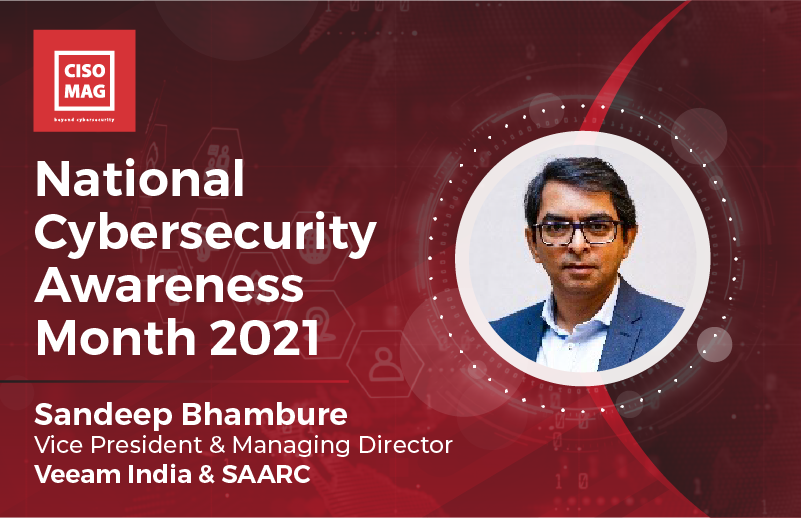
Sandeep Bhambure

“The resurgence of ransomware attacks in India has posed a great threat on various organizations, compelling them to re-evaluate and renew their data protection strategies. We believe the first step towards building resilient infrastructure is educating stakeholders and implementing accurate data backup and protection solutions/techniques. Further, devising an effective contingency strategy to mitigate the impact of the threats is equally important.”

2. The attitude of being tied to certain qualifications must change.

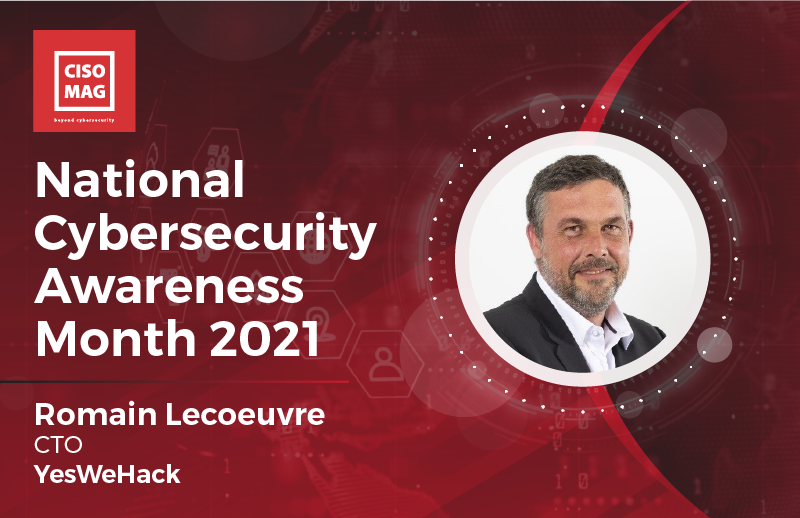
Romain Lecoeuvre

“When it comes to specialized security education – it’s clear there remain limitations in terms of the quality and volume of what is accessible. A huge number of those that have taught themselves are still denied access to positions in the field of cybersecurity due to their lack of diploma or because they do not have the right credentials. The reality is, when it comes to ethical hackers at least, many of them are in fact self-taught. This attitude of being tied to certain qualifications must change if a wider pool of available talent is to be tapped into. By adopting new methods of identifying competencies, both within an organization and externally, the door is open to make the most of existing, but often underutilized skills. In doing so, the industry, as a whole, is better equipped to address the cyber challenge of tomorrow.”

3. You won’t find yourself getting stagnant in cyber!

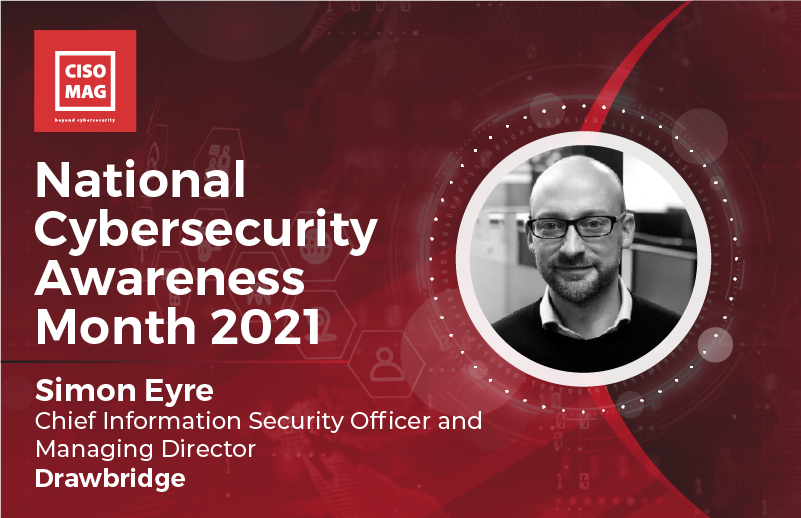
Simon Eyre

“If someone is thinking about a career in cyber, it’s a field with some really terrific sources of information available across the Internet. Cybersecurity has built up quite a respected community across Twitter in particular and you can regularly get involved in a thread regarding the latest events in the world of security and learn from others how they got into their careers. I strongly believe that cyber tends to be something you need to enjoy. It’s an engaging role; you’re constantly evolving and learning no matter what aspect of it you decide to study and work in. You won’t find yourself getting stagnant in cyber! Coming from a technical past is an obvious way into cyber but there are roles for those in finance, legal, compliance, logistics, auditing, and other security fields. It’s far more diverse than many realize.”

4. It is essential employees feel comfortable reaching out to the information security teams.

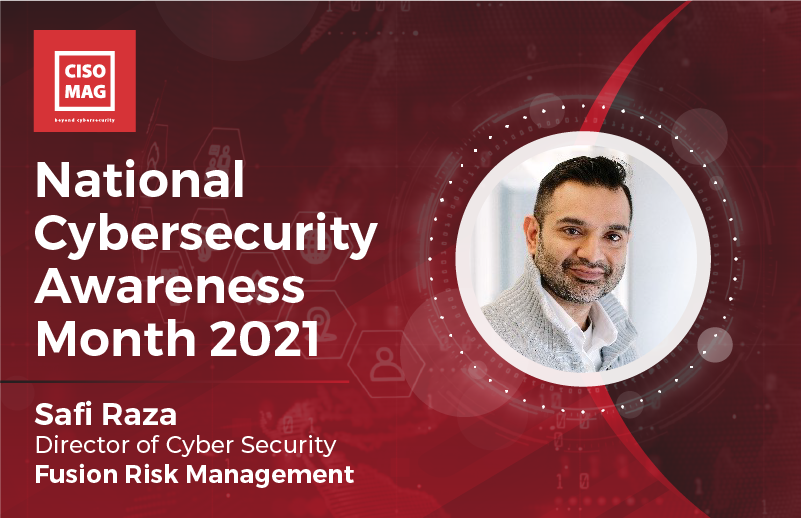
Safi Raza

“Organizations are spending more than ever on cybersecurity. The increase in adoption of Next-generation firewalls or utilizing Firewall as a Service (FWaaS) has helped fortify the digital parameters and has forced hackers to alter their attack methods. The bad actors are finding it much easier to infiltrate networks through phishing attacks. The FBI reported a 110% increase in phishing attacks in 2020 compared to a year before. The Verizon Data Breach Investigation Report (DBIR) associated 43% of breaches in 2020 involved phishing. Phishing remains the most significant threat in 2021. The truth is that most sophisticated anti-phishing tools are not 100% effective. A considerable number of phishing emails always manage to pass through the checkpoints. More needs to be done to fight this type of attack. The annual security awareness training and periodic phishing campaigns are no longer enough. Creating a security-focused culture, frequent interactive cybersecurity exercises and games, security ambassador programs, lunch and learn events, etc., helps spread awareness. Additionally, it is essential that employees feel comfortable reaching out to the information security teams for any anomaly they have noticed without feeling embarrassed if the alert turns out to be False-Positive.”

5. Phishing messages can be tricky to avoid.

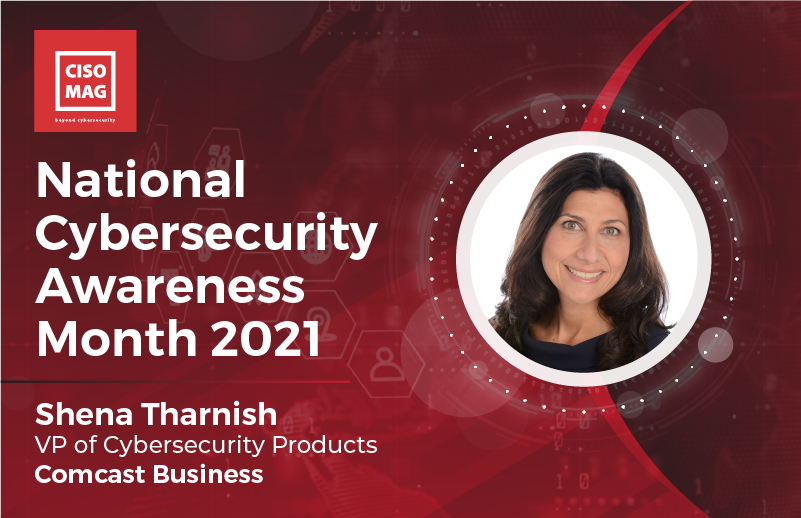
Shena Tharnish

“Phishing emails can come in many forms, whether it be impersonating someone you know, an urgent request from your bank, or a fake audit notification from the IRS during tax season. Many phishing emails look like they are coming from a legitimate sender, but if you view the actual sender email address rather than the alias, you’ll see that is far from legitimate. These phishing messages can be tricky to avoid, but if it feels a bit “off,” or doesn’t seem quite right, then follow your instincts and find a safe way to verify the email. If you don’t know the sender, don’t click on the link.

Be especially wary if you’re asked to provide any personal information, like your social security number or password, in an email. Most companies will not send you an email asking for such sensitive information. Check for slight variations in spelling or format in the domain name that you may miss at first glance. If you are unsure or don’t know the sender, verify by reaching out through an alternate method (not by hitting reply).”

6. The Internet is a physical thing. It’s not magic.

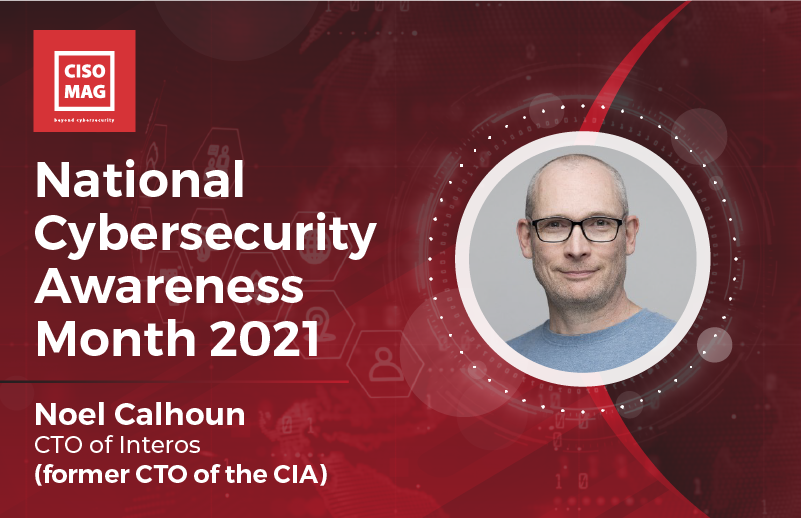
Noel Calhoun

“Companies need to expand their definition of cybersecurity to include all the nested dependencies in their digital supply chain. We often focus on endpoint protection: phishing, ransomware, DDOS. But there are other more systematic ways for a knowledgeable attacker to make your day miserable. The Internet is a physical thing. It’s not magic. Your data is being routed over physical fiber optic cables and through machines sitting in real data centers and peering exchanges. Those physical parts of your supply chain get way less attention than they should. Just ask any customer of AT&T, when a domestic terrorist took out a telco hub in Tennessee in 2000 or Facebook when some BGP configuration errors shut down 3 of the largest social media platforms for the entire world. Having a truly resilient digital infrastructure involves actively investigating and understanding the supply chain for services you may take for granted.”

7. Opt for an ongoing training mechanism that is engaging and interactive.

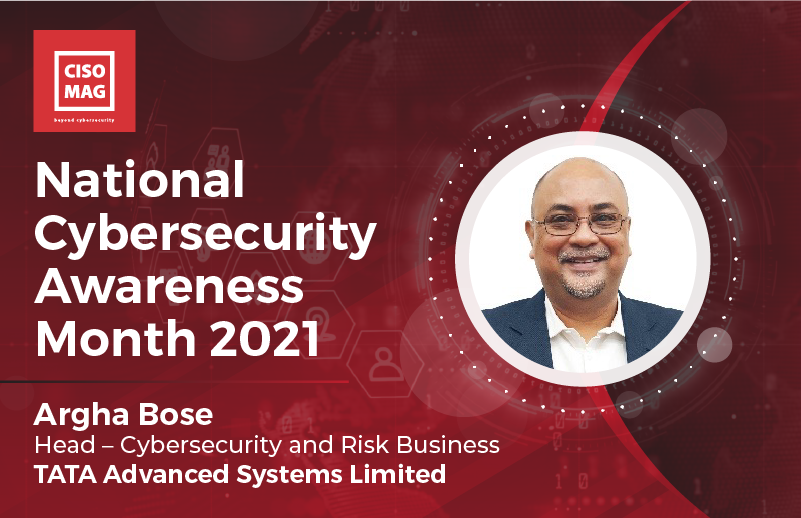
Argha Bose

“Cyberattacks and their level of sophistication are steadily on the rise. Stakeholders are constantly evaluating technologies to implement and maintain cybersecurity defenses that further need to be optimized due to the COVID situation. As per Global Workforce Analytics, approximately 30% of the workforce is expected to work remotely by the end of 2021, which, in turn, has accelerated the use of potentially vulnerable services like VPNs and unpatched Windows machines. Furthermore, the lack of privacy at home is amplifying the threat layer.

These technologies might provide the much-needed defense, but since human errors contribute to almost 95% of all data breaches, Security Awareness Training becomes a critical element that can’t be ignored.

Along with creating state-of-the-art security software using automation, machine learning, and advanced threat intelligence, an organization needs to opt for an ongoing training mechanism that is engaging, interactive and covers multiple topics like phishing, ransomware, BEC, and physical security. This can be the best way to equip employees with the knowledge to spot and effectively respond to cyberthreats.”

8. Automate and centralize security processes.

Josh Rickard

“Cybersecurity Awareness Month serves as a timely reminder for companies to reevaluate their cybersecurity posture after a tumultuous year of cyberattacks across industries.

The dramatic spike in ransomware and supply chain attacks illustrates that every company, regardless of vertical, is a software company and security will only continue to rise in importance when it comes to ensuring the continued operations of the business.

To protect valuable information and prevent breaches, enterprises must invest in multi-faceted platforms that centralize and automate detection, response, and investigation protocols. Security teams need full visibility into IT environments and the ability to respond in real-time to limit the consequences should a cyberattack occur.

By automating and centralizing security processes, organizations can reduce the chance of human error while achieving infinitely smoother execution of security-related tasks and ultimately ensuring that highly-sensitive personal information is kept safe and secure.”

9. Implement zero-trust for APIs.

Nathanael Coffing

“Modern organizations are sharing data over APIs to digitally transform and rapidly bring new services to market. APIs are connecting with internal and external services, transferring sensitive data with users and partners across the hybrid cloud. Consequently, organizations are facing increased cyber risks and a growing attack surface. Legacy identity and access management (IAM) tools cannot protect and secure identities working in modern applications, much less multi-cloud infrastructures.

Gartner predicts that APIs will be the most frequent attack vector by 2022. Implementing zero-trust for APIs to protect against known and emerging threats like broken object-level authorization or broken authentication means building a strong application identity along with a strong user identity, as well as protecting sensitive data with fine-grained authorization. Properly assessing and mitigating risks at the API level can also allow organizations to enhance the user experience with transactional Authentication/ Authorization and fine-grained consent management.

Cybersecurity Awareness Month shines a light on the changing state of cybersecurity. Prioritizing cybersecurity and adopting these modern capabilities is no longer optional as digital transformation accelerates.”

10. Move away from obsolete authentication methods.

Robert Prigge

“The amount of large-scale cybersecurity breaches we’ve witnessed in the last year highlights just how creative cybercriminals will get to steal sensitive data and sell it on the dark web. The number of reported identity theft cases more than doubled from 2019 to 2020, while the number of reported data breaches escalated 38% from the first to the second half of 2021. With traditional online verification tools such as knowledge-based authentication and passwords, organizations will continue to place consumers’ personal information at risk of being compromised.

Cybersecurity Awareness Month encourages security leaders and executive decision-makers to modernize their security practices in order to adapt to the increased sophistication of fraudsters. In today’s cybersecurity climate, organizations must move away from outdated, obsolete authentication methods and implement more advanced identity verification solutions, like face-based biometric authentication, that confirm online users are truly who they claim to be. This month is also important for educating consumers on how to safeguard their digital identity and manage personal data consent rights online. These best practices are crucial to keep data away from the hands of malicious actors.”

11. Implement a unified cloud security platform.

Anurag Kahol

“From cloud misconfigurations exposing massive amounts of sensitive data online to ransomware attacks severely impacting critical infrastructure, this past year has underlined the inherent lack of proactive security across organizations of all sizes. As we move toward a new era of hybrid operations post-pandemic, the sophistication and frequency of cyberattacks will only continue to increase at an exponentially higher rate. Organizations must be prepared to face the evolving threat landscape to protect their employees, corporate infrastructure, and sensitive data.

International Cybersecurity Awareness Month serves as a reminder for enterprises to make security a strategic imperative. A vigilant security posture starts with implementing a unified cloud security platform, like secure access service edge (SASE) and security service edge (SSE), that replaces various disjointed point products and extends consistent security to all sanctioned cloud resources while following a Zero Trust framework to prevent unauthorized network access. Additionally, enforcing comprehensive cybersecurity training for all employees, hiring security experts, and continuously monitoring and enhancing cybersecurity postures will ensure organizations are properly equipped to defend their modern operations.”

12. Companies are still not prioritizing cybersecurity.

Matt Sanders

“Cybersecurity Awareness Month serves as a great reminder for enterprises to recognize the importance of securing their organizations against today’s top security threats. This year has been a hotbed for cybersecurity hacks and breaches, with increased attacks on our government and critical infrastructure entities like we have seen with the Colonial Pipeline, Solarwinds, JBS, the attacks on California and Florida water systems, and many others.

Though attacks continue to rise in numbers and impact, companies are still not prioritizing cybersecurity. A report earlier this year found that just 7% of security leaders report directly to the CEO, revealing an inability for security leaders to influence real change within an organization. In order for organizations to achieve the necessary organizational visibility and influence to effectively build a security program and mitigate increasing threats, security leaders such as CISOs and CIOs must report directly to the CEO. This structure allows the CISO to directly communicate potential risks to the organization, mitigate potential risks and influence each function in the organization to create greater security awareness.”

How to Build a Career in Ethical Hacking in 2021 and Beyond

ethical hacking

Ethical hacking is emerging as a viable career path for IT and security professionals in 2021. The alarming rate of cyber incidents has pushed private organizations and government agencies to strengthen their defenses against malicious hackers in recent years. According to a Ponemon Institute study, the cost of data breaches jumped from $3.86 million to $4.24 million in 2021.

The pandemic-induced remote work also adds to the high incidents of cyberattacks, augmenting the need for cyber experts to take stock of the situation. Additionally, the need for skilled cybersecurity specialists to combat cybercrime has paved the way for numerous ethical hacking jobs.

This article sheds light on the career scope and opportunities for ethical hackers in 2021 and discusses the skills one needs to acquire to start their ethical hacking journey,

Before we discuss the skill sets and requirements for an ethical hacker, let’s briefly understand ethical hacking concepts.

Understanding Ethical Hacking and Ethical Hackers

Ethical hacking is an authorized attempt to intrude an organization’s network and systems to identify potential threats before cybercriminals do. Ethical hackers perform penetration testing to discover the anomalies and vulnerabilities that could disrupt the operations. They think and act like black hat hackers in order to find the bugs and patch the flaws without malicious intent.

Cyberattacks can cost organizations millions. Therefore, many firms are investing in cybersecurity practices and experts. Hence, the time is ripe for IT, security, and even networking professionals who want to delve into cybersecurity and build a rewarding career.

So, if you have limited knowledge of ethical hacking and wish to kickstart your career as an ethical hacker, this guide can help broaden your horizon. This article highlights the skillsets and requirements you need to have to become an ethical hacker.

Why Should You Pursue a Career in Ethical Hacking

The scope of vulnerabilities and attacks expands as modern organizations adjust to digital transformations and embrace cloud technology. As a result, businesses require cybersecurity experts to protect their digital assets, and ethical hacking is one such field that is gaining momentum in the wake of recent cyberattacks. Let’s look at a few opportunities or benefits that ethical hacking has to offer:

  • High Pay Scale and Career Scope

As previously mentioned, the new and complex sophisticated cyberattacks have prompted organizations to improve their security measures and invest in a cyber workforce. While the demand for cybersecurity specialists is rapidly increasing, there is also a severe talent drought. Therefore, there is a need to close the skills gap, and ethical hacking is a viable career opportunity, and the demand is only going to rise in the future. Gaining certifications as an ethical hacker also elevates the chances of landing a high-paying job. From government agencies to private firms, banks, institutions are hiring ethical hackers to fortify their defenses against malicious attacks. According to PayScale, the average salary of an ethical hacker is $80,000 per year, while a certified ethical hacker can earn an average salary of $94,000 per year.

  • Diverse Employment Opportunities

After gaining advanced certifications or proficiency in ethical hacking, one can also set foot in other cybersecurity job roles. Ethical hackers are adept at network and system security, web and application security, pen testing, and others which make them eligible to also apply as a:

  • Network administrator/manager
  • Security investigator
  • Penetration tester
  • Web security administrator/manager
  • Data security analyst/specialist
  • IT security administrator/consultant/manager
  • Job Satisfaction

As an ethical hacker, you will play an integral role in safeguarding an organization’s digital assets and devising security measures, and effectively implementing them. Enterprises are aware of the importance ethical hackers hold in safeguarding their data and assets. As a certified ethical hacker, you can either be a part of in-house teams or offer your services independently from anywhere. The benefits and importance associated with ethical hacking are enormous, contributing to elevated job status and satisfaction.

Quick Guide on How to Become an Ethical Hacker

1. Educational Requirements

There is no one formula for becoming an ethical hacker. If this field entices you, you need to plan your ethical hacking learning path as per the industry requirements. To be eligible for an ethical hacking role, one needs to hold a bachelor’s degree in computer science, IT, or any subset of cybersecurity.

2. Acquire Fundamental and Essential Skills

An ethical hacker is a skilled pen tester as well. Ethical hackers need to demonstrate expertise in network security, web applications, networking databases, etc. Therefore, they need to have sound technical knowledge and understanding of operating systems, programming languages, networking, connectivity concepts, hacking tools, etc. Ethical hackers employ offensive techniques or measures to assess the security of an organization. Therefore, aspiring ethical hackers can acquire the following skills to learn how to start hacking ethically:

  • Networking skills
  • Technical skills
  • Programming skills
  • Encryption (Cryptography) skills
  • Knowledge about databases
  • Quick problem-solving skills
  • Effective communication skills

Apart from these, learning the fundamentals of ethical hacking, different types of ethical hackers, the difference between offensive and defensive security strategies are also crucial.

3. Getting Certified

While one can learn ethical hacking on their own, it is certainly not easy. You need to continuously upskill yourself with the latest technologies and tools as technology is rapidly evolving and the threat domain. You can learn and acquire the mentioned skills by enrolling in ethical hacking certifications that align with industry-specific requirements. Getting certified is the next step to advance your career further and earn lucrative benefits. EC-Council’s Certified Ethical Hacker (C|EH) program is globally recognized and equips participants with the necessary skills to hone their craft. It’s one of the most challenging and sought-after ethical hacking certifications in the industry.

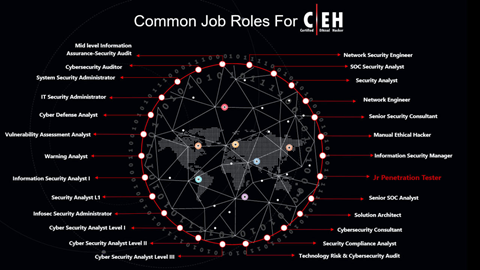
common job roles for CEH

Why Should You Join EC-Council’s Certified Ethical Hacker (C|EH)

C|EH is a credible program and ANSI 17024 Compliant. A pioneer in setting a global standard for ethical hacking, C|EH is an apt program for learning the elements of ethical hacking in a structured environment. It’s also stated as a baseline certification on the U.S Department of Defense (DoD) 8570/8140 Directive, the British NCSC Intelligence Agency, and several others.

The C|EH program is curated by industry experts to train participants in the latest hacking tools and technologies that hackers use. They can also expand their knowledge in diverse areas such as footprinting, network scanning, system hacking, sniffing, session hijacking etc.

The accredited program also includes twenty-four incredible hacking challenges across four levels of complexity that cover eighteen attack vectors. This hacking challenge enables participants to deal with real-life scenarios in this field.

Once you get the C|EH certification, you can also be eligible to work in diverse areas. Some of the common job roles for C|EH are:

  • Cyber Defense Analyst
  • Vulnerability Assessment Analyst
  • Cyber Security Analyst Level I and Level II
  • Network Security Engineer
  • Manual Ethical Hacker
  • Senior Security Consultant
  • And more

Cybersecurity is a thriving field, and the scope of ethical hacking looks favorable in 2021 and beyond. The demand for ethical hackers in any industry is steadily growing considering the cyberattacks. So, if you are keen on making your mark as an ethical hacker to protect your work data and assets, get certified as an ethical hacker.

20+ Job Roles | 10,000+ Job Openings | Avg. Salary of $93,000

Become a Certified Ethical Hacker.


FAQs

  • Who is eligible for the C|EH program?

Anybody with sound knowledge in computer and programming can learn this course. People who want to explore the world of penetration testing and combating cybercrime can take up this course.

  • What is the relevant work experience needed to be an ethical hacker?

Some employers also expect you to have a certain level of related work experience in computer technology. As such, ethical hackers can initially assume a network defender, penetration tester, or systems analyst position.


References:

  1. https://www.eccouncil.org/programs/certified-ethical-hacker-ceh/
  2. https://cisomag.com/how-to-learn-ethical-hacking-from-scratch-and-start-your-career/
  3. https://www.mygreatlearning.com/blog/how-to-start-a-career-in-ethical-hacking/ 

Attackers Receive $5.2 Bn in Ransom via Bitcoin Payments

Bitcoin, Ransomware Attacks

Ransom payments in the form of virtual currency have been increased exponentially. As per an analysis from the U.S. Treasury Department’s Financial Crimes Enforcement Network (FinCEN), around $5.2 billion worth of Bitcoin transactions are linked to the commonly known ransomware operators. In addition to Bitcoin, FinCEN also identified ransom payments requested in Monero.

The FinCEN analysis of ransomware-related suspicious activity reports (SARs) during the first half of 2021 revealed that ransomware is a significant threat to the U.S. financial sector, businesses, and the public.

“Ransomware actors are criminals who are enabled by gaps in compliance regimes across the global virtual currency ecosystem. Treasury is helping to stop ransomware attacks by making it difficult for criminals to profit from their crimes, but we need partners in the private sector to help prevent this illicit activity,” said Deputy Secretary of the Treasury Wally Adeyemo.

Top Ransomware Variants

While the analysis found over 68 ransomware variants reported in SAR data for transactions during the review period. The most-reported variants include:

  • REvil or Sodinokibi
  • Conti
  • DarkSide
  • Avaddon
  • Phobos

Rising Ransom Trend

In total, FinCEN observed $590 million in ransomware-related SARs, a 42% increase compared to a total of $416 million for all of 2020. It is suspected that the SARs data in 2021 are projected to have a higher ransomware-related transaction value than SARs filed in the previous ten years combined.

“This trend potentially reflects the increasing overall prevalence of ransomware-related incidents as well as improved detection and reporting of incidents by covered financial institutions, which may also be related to increased awareness of reporting obligations pertaining to ransomware and willingness to report,” FinCEN said.

Actions Required

FinCEN recommended certain actions in case of any suspicious ransomware activity. These include:

  • Incorporate Cyber Event Indicators (IOCs) from threat data sources into intrusion detection systems and security alert systems to enable active blocking or reporting of suspected malicious activity.
  • Contact law enforcement immediately regarding any identified activity related to ransomware, and contact OFAC if there is any reason to suspect the cyber actor demanding ransomware payment may be sanctioned
  • Report suspicious activity to FinCEN, highlighting the presence of IOCs, such as suspicious email addresses, file names, hashes, domains, and IP addresses, can be provided in the SAR form.

30 Governments Join Hands to Suppress Ransomware Payment Channels

JVCKenwood, LockFile ransomware, ransomware attacks in India, Suppress ransomware payment channels

The Virtual Counter-Ransomware Initiative meeting facilitated by the White House National Security Council, to deliberate the efforts to improving national resilience, addressing the misuse of virtual currency, laundering ransom payments, disrupting the ransomware ecosystem, and prosecuting the cybercriminals, has resulted in actions being initiated to address the increasing ransomware attacks. Officials from 31 countries and the European Union have issued a joint statement that their governments would take action to disrupt the payment channels and address the misuse of virtual currency.

There has been a spate of incidents where ransomware has been demanded in the form of cryptocurrency by cybercriminals for ease of business operations. Incidents of rising ransomware attacks have been reflecting the low resilience of the critical network infrastructure and the vulnerabilities.

The statement was issued by ministers and representatives from Australia, Brazil, Bulgaria, Canada, the Czech Republic, the Dominican Republic, Estonia, European Union, France, Germany, India, Ireland, Israel, Italy, Japan, Kenya, Lithuania, Mexico, the Netherlands, New Zealand, Nigeria, Poland, Republic of Korea, Romania, Singapore, South Africa, Sweden, Switzerland, Ukraine, United Arab Emirates, the United Kingdom, and the United States.

Per the White House statement, significant economic losses have been incurred globally due to the increased ransomware attacks. “Ransomware payments reached over $400 million globally in 2020, and topped $81 million in the first quarter of 2021, illustrating the financially driven nature of these activities.”

Ransomware is a world-wide threat leveraging global infrastructure – and no country can fight it alone. This week, the United States and dozens of nations aligned on common approaches to counter it together. 

The Counter-Ransomware Initiative

Governments of the 30 countries have realized the need for an immediate action plan and collective effort to tackle the risk of ransomware. Cybercriminals abuse the financial mechanism of countries and launder huge amounts through cryptocurrency mining, evading all kinds of surveillance.

The White House states, “We are dedicated to enhancing our efforts to disrupt the ransomware business model and associated money-laundering activities, including through ensuring our national AML frameworks effectively identify and mitigate risks associated with VASPs and related activities. We will enhance the capacity of our national authorities, to include regulators, financial intelligence units, and law enforcement to regulate, supervise, investigate, and act against virtual asset exploitation with appropriate protections for privacy, and recognizing that specific actions may vary based on domestic contexts.  We will also seek out ways to cooperate with the virtual asset industry to enhance ransomware-related information sharing.”

The need of the hour is to collectively look at the problem of exploitation of the digital asset platform and disrupt the machinery from further exploiting the platform. As policies and regulations vary from one jurisdiction to the other, this effort will help accelerate the investigation and prosecution of the criminals. The problem has been exacerbated as incidents of attack are treated in isolation.

“Ransomware criminal activity is often transnational in nature, and requires timely and consistent collaboration across law enforcement, national security authorities, cybersecurity agencies, and financial intelligence units. Such collaboration must be consistent with domestic legal requirements and may be pursued alongside diplomatic engagement so that malicious activity can be identified and addressed, and the actors responsible can be investigated and prosecuted.  Together, we must take appropriate steps to counter cybercriminal activity emanating from within our own territory and impress urgency on others to do the same, in order to eliminate safe havens for the operators who conduct such disruptive and destabilizing operations,” the White House said.

NSA Releases Guidelines to Secure Wildcard TLS Certificates

professional certifications, certificates, PKI, PKI Automation

The National Security Agency (NSA) in the U.S. is alerting government and public organizations about the risks associated with the use of wildcard Transport Layer Security (TLS) certificates that is resulting in the exploitation of Application Layer Protocols Allowing Cross-Protocol Attacks (ALPACA). The NSA warned that cybercriminals could exploit vulnerabilities in ALPACA to break into corporate networks and obtain sensitive information.

What is a Wildcard TLS Certificate?

A wildcard TLS certificate or digital certificate is used to authenticate multiple servers. A TLS certificate allows security admins to use a single wildcard to protect the number of subdomains online. Threat actors often try to misuse wildcard TLS certificates, exploit unsecured servers, and decrypt TLS-encrypted traffic.

ALPACA Attack

ALPACA is a new kind of web application attack that prevents wildcard certificates to verify server identities during the TLS handshake. Attackers leverage the ALPACA technique to exploit hardened web applications via non-Hypertext Transfer Protocol (HTTP) services secured using the same or a similar TLS certificate.

The NSA has released a Cybersecurity Information (CSI) sheet with guidance to help secure the Department of Defense (DoD), National Security Systems (NSS), and Defense Industrial Base (DIB) organizations from poorly implemented wildcard TLS certificates and ALPACA attacks.

According to NSA, the realistic exploitation scenario in an ALPACA attack requires:

  • A target web application that uses TLS
  • Another service/application (typically not a web server) that presents a valid TLS certificate with a subject name that would be valid for the targeted web app, such as when wildcard certificates are too broadly scoped
  • A means for the malicious actor to redirect victim network traffic intended for the target web app to the second service (likely achieved through Domain Name System (DNS) poisoning or a man-in-the-middle compromise)
  • An HTTP request that is accepted by the second service that results in at least part of the request being reflected in the sender

Mitigating ALPACA Attacks

The NSA also recommended certain security measures to defend against ALPACA threats. These include:

  • Understanding the scope of each wildcard certificate used for the organization
  • Identifying all locations where the wildcard certificate’s private key is stored and ensure that the security posture for that location is commensurate with the requirements for all applications within the certificate’s scope.
  • Using an application gateway or Web Application Firewall (WAF) in front of servers, including non-HTTP servers.
  • Using encrypted DNS and validate DNS Security Extensions (DNSSEC) to prevent DNS redirection.
  • Enabling Application-Layer Protocol Negotiation (ALPN) to specify permitted protocols
  • Maintaining web browsers at the latest version with current updates

“By avoiding or responsibly using wildcard certificates, organizations can harden network identities against malicious actors using masquerade techniques. Additionally, ALPACA mitigations block known protocol confusion exploits and strengthen network posture against potential future issues. Administrators should always seek to apply defense-in-depth approaches that apply to classes of risks/threats in order to counter malicious threat actors,” the NSA said.

Three Steps to Bridge the Network and Security Divide

4 in 10 Companies Expose Unsafe Network Services Online, network and security

Until recently, network and security teams could go about their business completely effectively with little requirement for anything more than a light-touch partnership. If network teams are responsible for the roads upon which business data travels, then security teams have traditionally been in charge of barriers, guard rails, and toll booths.  The two teams have tended to operate within a shared working environment, with very clear and separate areas of activity. But, thanks to the impact of Digital Transformation, things are changing, and parallel-but-separate activity is not going to be workable for much longer.

By Neil Thacker, CISO EMEA, Netskope

Digital Transformation means something different to everyone, but you’d struggle to find a project that didn’t include a predominance of cloud, and it is this that is the cause of the shake-up for networking/infrastructure and security.

While networking and infrastructure teams prioritize performance, security teams are guided by a need to protect. With cloud, the two are not so easily separated. Old school approaches security directly impinge upon performance and usability, but overly permissive networking workarounds leave little security protection for sensitive and regulated corporate data that no longer sits inside a protective perimeter.

Security and networking teams know this. Most can see the need for change and closer collaboration, and many are even looking to converge teams and budgets, adopting a SASE (Secure Access Service Edge) architecture as a way, to ensure neither performance nor protection is de-prioritized. But these transitions are not easy. My job is to support CIOs and CISOs to make these necessary changes and I advise that teams agree and adhere to the following steps:

  1. Agree joint metrics

To avoid conflicting priorities and optimizations, network and security teams should agree on a common set of metrics for digital risk, network performance, and user experience. Each action taken should be evaluated with respect to the unified set of metrics. These goals are jointly owned; network and security teams are equally accountable.  Securing this consensus from the outset ensures no procurement decision is taken, or architectural ideology pursued, that would negatively impact upon another KPI.  These metrics enable teams to pursue purchasing projects with multiple goals – passing any potential internal disputes out for resolution by the vendors pitching their technology solution.

  1. Ensure full visibility of performance

Somehow, the many benefits of cloud have been enough to persuade organizations that visibility over what is being used – by whom, when, and in what ways – is not essential. Security professionals who find themselves disquieted by this state of affairs have had to bite their tongues while performance, cost, and usability advantage were prioritized over risk management. We need to agree that a lack of visibility is no longer something businesses should accept as an unavoidable side effect of the cloud.

To the rescue of the blindsided security professional rides SASE, securing data wherever it resides or travels (inside or outside of corporate infrastructure). Network and security teams should use the increased telemetry delivered by a mature SASE platform to create a whole new and detailed set of insights. These reveal the reality of business activity and processes and provide the potential to identify opportunities for service and policy improvement. Such visibility enables constant learning about the ways in which the business is operating, and understanding of end-user actions, behaviors, and processes, and so will help manage digital risk as well as identifying performance uplifts.

  1. Take a unified approach to emerging threats

Network and security teams should seek to use the greater visibility delivered by SASE, along with unified metrics, to identify emerging risks and develop strategies to manage these within risk appetite. This allows the development of business, network, and security roadmaps that get ahead of threats. Just as shared metrics prevent security professionals from designing architectures that create unacceptable performance penalties, so network professionals can make use of threat intelligence to design a more robust and relevant access infrastructure. A SASE architecture makes a shared network/security strategy essential and the acknowledgment of that, with collaboration at the highest level from the outset, will make the process smoother sailing.

UX designers talk about ‘desire paths’. A desire path can be easily seen as you walk your dog about town; it’s the muddy route that cuts the corner, avoiding the tarmac path to find the faster route. Over the past decade, application teams grew to understand the power of user desires, with Shadow IT creeping in around the organization. Now it’s the security and networking teams that are having to rethink their infrastructure as a result of these desire paths. The workforce is embracing the work-from-anywhere approach, using the devices they choose and accessing the applications that they determine best support productivity. If we do not identify and respond to the desire paths in use then we fail to support the business. But if the desire paths we allow do not protect corporate data then we may become equally negligent.

Networking and security professionals must therefore collaborate to build an enabling infrastructure that both protects and shares the essential data required. Without parallel goals and metrics, one team’s success is tomorrow’s battle for the other side.


About the Author

Neil ThackerNeil Thacker has an impressive background and is a regular commentator on DLP, Neurodiversity, data protection, and GDPR as well as other topics. He is co-founder of the Security Advisor Alliance, an advisory board member for the Cloud Security Alliance, and a member of EUUG (European User Group for Enterprise and Cloud Data Protection).

Neil currently serves as CISO for Netskope, tasked with supporting the business security challenges through product security, incident management, data protection, security audit, governance, risk, and compliance. He leads the data protection function in EMEA and is the global GDPR lead and central to Netskope’s annual cloud threat report, the latest of which was published in February.

Disclaimer

Views expressed in this article are personal. The facts, opinions, and language in the article do not reflect the views of CISO MAG and CISO MAG does not assume any responsibility or liability for the same.