Home Blog Page 223

Hackers Try Sophisticated Cyberattacks Out of Boredom During Pandemic: CyberProof

Cloud of Logs dark web market

Several Hackers across the globe are taking advantage of the COVID-19 outbreak to accelerate their malicious activities and distribute malware. Cybersecurity firm CyberProof has warned that the number of cybersecurity scams has risen during the coronavirus period. The key causes for the emergence of these new threats is likely due to social distancing norms and malware authors being bored and stuck at home due to ongoing lockdown, according to CyberProof.

“Hackers have underground networks for communicating among themselves and sharing resources for a cyberattack. Actively tracking this activity, CyberProof witnessed these forum complaints about being stuck at home because of the coronavirus, leading to a greater amount of frustration and malicious activity,” the statement from CyberProof read.

Tony Velleca, Chief Executive Officer, CyberProof and CISO, UST Global said, “To help its customers during these unprecedented times, CyberProof and UST Global have partnered with Cato Networks to offer their 95% customers, a work from home (WFH) solution to reduce the security risks to large-scale remote working. The solution creates a globally available VPN solution that allows organizations to extend their security policy to the WFH workforce and optimize network performance.”

How Coronavirus Impacting Cyberspace

A research from CYFIRMA found that Korean-speaking hackers were planning to make financial gains using sophisticated phishing campaigns, loaded with sensitive data exfiltration malware and creating a new variant of EMOTET virus (EMOTET is a malware strain that was first detected in 2014 and is one of the most prevalent threats in 2019). These hackers were planning to target Japan, Australia, Singapore, and the U.S. the researchers also observed North Korean hackers targeting South Korean businesses. The phishing email had the Korean language title “Coronavirus Correspondence”, tricking recipients into opening them and launching malware into machines and networks.

U.S. Government Offers $5 Mn Reward for Information on North Korean Threat Groups

U.S. Government Offers $5 Mn Reward for Information on North Korean Threat Groups

The U.S. government announced that it is offering $5 million reward for information about North Korea-based threat groups and hacking campaigns. In an advisory notice, issued by the U.S. Departments of Homeland Security, State and Treasury, the FBI and the Cybersecurity Infrastructure and Security Agency (CISA), the government warned the world about the potential cyberthreats posed by North Korean state-sponsored hackers to the global banking and financial institutions. The advisory highlighted the cybercrimes from North Korea, formally known as the Democratic People’s Republic of Korea (DPRK), and recommended steps to mitigate the cyber risks.

Apart from the recent cyberattacks, the advisory also contains a comprehensive guide to help the international community, businesses, and other governments defend against North Korea’s cyber operations. Industry experts opined that the advisory was issued to keep organizations aware of the ongoing cyber risks posed by North Korean-linked groups, especially at a time when the world is suffering from the COVID-19 pandemic.

“North Korea’s malicious cyber activities threaten the U.S. and countries around the world and, in particular, pose a significant threat to the integrity and stability of the international financial system. The U.S. works closely with like-minded countries to focus attention on and condemn disruptive, destructive, or otherwise destabilizing behavior in cyberspace. It is vital for foreign governments, network defenders, and the public to stay vigilant and to work together to mitigate the cyber threat posed by North Korea,” the advisory stated.

Through the years, North Korea has been linked to a series of cyberattacks, either to display its cyber prowess or just to fund their activities. One of the most brazen attacks occurred in February 2016, when hackers tried to steal $101 million from a Bangladesh Central bank account at the New York Federal Reserve and move it to Sri Lanka.

Measures to Counter the DPRK Cyberthreats

The advisory strongly recommended governments, industries, civil societies, and individuals to take relevant cybersecurity measures to protect themselves from the DPRK cyberthreats. These include:

  • Raise awareness of the DPRK cyberthreat
  • Share technical information of the DPRK cyberthreats
  • Implement and promote cybersecurity best practices
  • Notify Law Enforcement
  • Strengthen Anti-Money Laundering
  • Countering the Financing of Terrorism

How to Claim the Reward?

The advisory stated that, “If you have information about illicit DPRK activities in cyberspace, including past or ongoing operations, providing such information through the Department of State’s Rewards for Justice program could make you eligible to receive an award of up to $5 million.” Citizens with any kind of information on illicit cyber activities can visit Rewards for Justice program’s website, www.rewardsforjustice.net, and help government nab the cybercriminals.

Yellow Messenger Raises $20 Mn Series B Funding for Conversational AI Platform Expansion

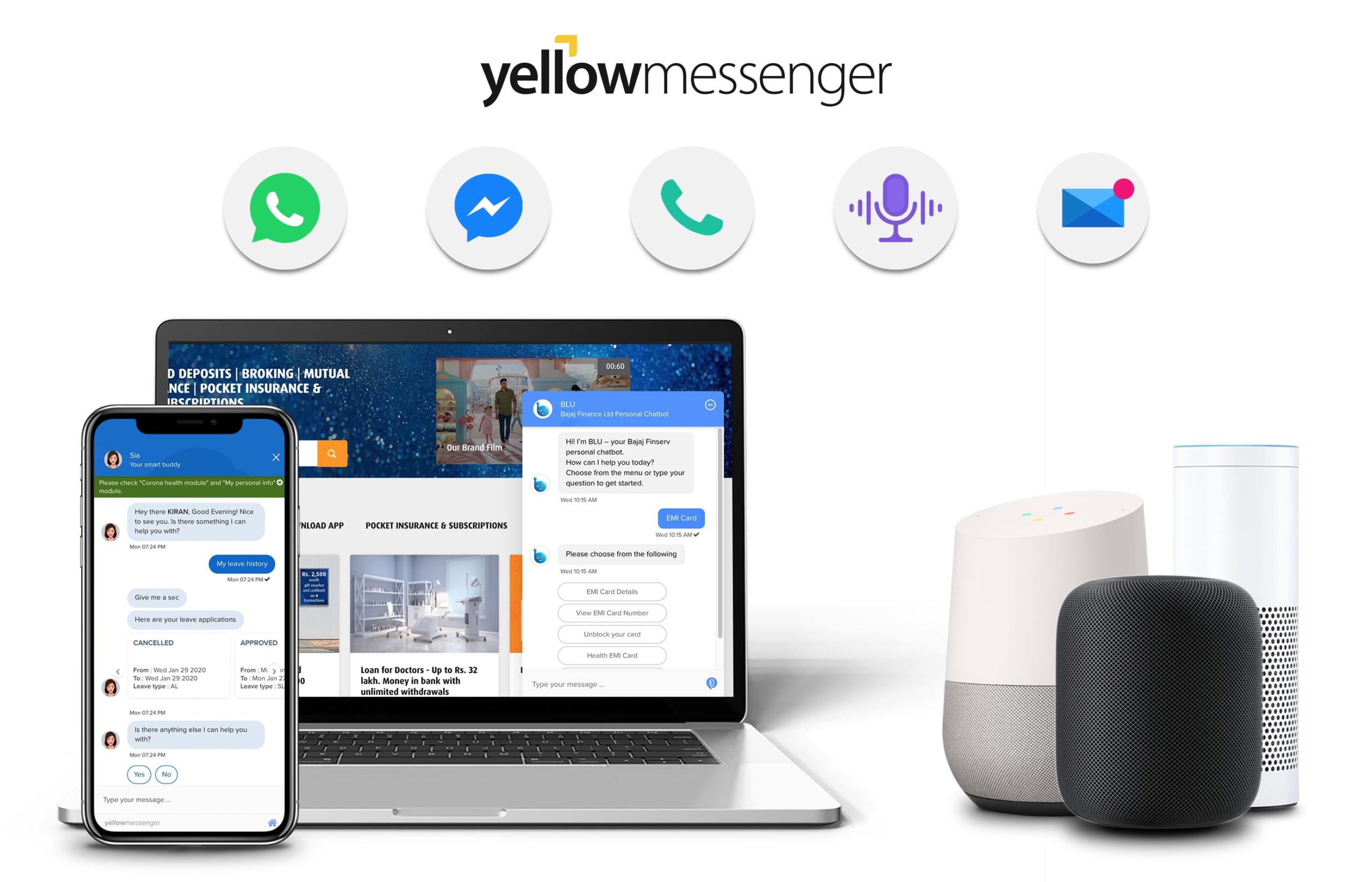
Yellow Messenger, a conversational AI platform based on the cognitive engagement cloud technology, announced a $20 million Series B investment taking the total investment to $24 million to date. The funding round was led by Lightspeed Venture Partners and Lightspeed India Partners, who also led the Series A funding in 2019.

One in every three companies globally is implementing conversational AI and chatbots — the pull is irreversible.

– Dev Khare, Partner, Lightspeed India Partners

Yellow Messenger has over 120+ languages for voice and text support in its cognitive engagement cloud and thus, the fresh capital will be used to fuel its international expansion across the U.S., Europe, Latin America, and Asia-Pacific markets. In addition, the company will further invest in its product innovation roadmap, including the deepening of multi-lingual voice bot capabilities, expanding enterprise integrations, and launching a developer marketplace for virtual assistants.

Dev Khare, Partner, Lightspeed India Partners, said, “One in every three companies globally is implementing conversational AI and chatbots — the pull is irreversible. Yellow Messenger has taken advantage of this market pull with its rapid time-to-value, transactional platform and multi-language support for global rollouts.”

The Cognitive Engagement Cloud

Any cognitive system leverages the core skills of our brain — think, read, learn, remember, reason, and pay attention to. The cognitive engagement cloud uses chatbots that deliberate these actions and react by interacting through text and voice mediums across channels in a natural human-like manner. It enables enterprises to automate and orchestrate workflows for customer and employee engagement with minimal human intervention.

The chatbots can be integrated and used across multiple communication channels like Microsoft Teams, Slack, WhatsApp, telephony, digital assistants and with the enterprise’s existing System of Record and System of Engagement. By acting as a single source of intelligence across all channels, and across customer and employee conversations, this platform ensures smart, consistent and coherent customer and employee experience.

On similar lines, the Yellow Messenger platform is successfully powering around 30 million monthly conversations on chatbots, across more than 100 customers around the globe. Owing to this and the ongoing COVID-19 pandemic emergency in India, the company has also been appointed by the National Health Authority of India (NHAI) to provide chatbots to several state governments (Madhya Pradesh, Punjab, and Rajasthan), which will assist with citizen engagement over WhatsApp and Facebook Messenger. It has also deployed special chatbots for enterprises to deal with employee engagement, customer engagement, and ITSM automation, helping them drive business continuity.

Kenya Reports 37.1 Mn Cyberattacks in Q4 of 2019: Report

Kenya Reports 37.1 Mn Cyberattacks in Q4 of 2019: Report

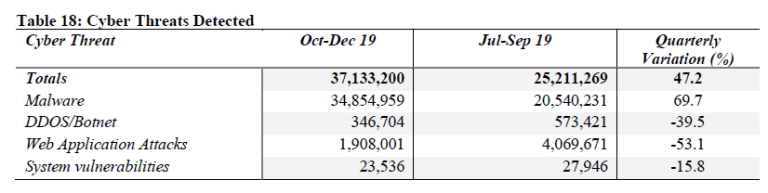
Cybersecurity analysts in Kenya discovered a total of 37.1 million cyberattacks in the Q4 of 2019, which is a 47.2% increase when compared to 25.2 million cyberthreats detected in Q3 of the same year.

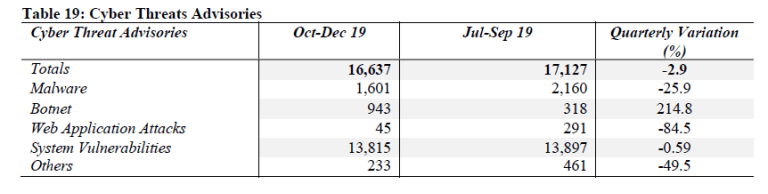
According to recent analysis by the Communications Authority of Kenya (CA), and derived from figures provided by the National Kenya Computer Incident Response Team (KE-CIRT/CC), researchers discovered a growing number of malware, web application attacks, system misconfiguration, and online abuse. The CA’s cyber experts team issued 16,637 cyber threat advisories to the affected, a 2.9% increase from the 17,127 alerts in Q3 of 2019. It is said that Kenyan businesses suffered billions of Shillings and a huge number of sensitive information to hackers every year.

Image Source: National KE-CIRT/CC

The KE-CIRT also stated that Kenya ranked amongst the top 10 countries in the continent with the highest number of people exposed to cyberattacks. The increase in cybercrimes led Kenyan organizations to invest more in cybersecurity products and services to prevent cyber risks.

Image Source: National KE-CIRT/CC

“Emerging telecommunication challenges such as cybersecurity incidents are likely to increase and evolve at a similar rate and therefore, the relevant government institutions and stakeholders will need to continuously review and where necessary, revise the existing national laws, policies and regulations in order to address these challenges, while enhancing innovation,” the report stated.

 CBK’s New Cybersecurity Guidelines

In order to fight against banking frauds and to get a better view of the new threats that payment service providers are facing, the Central Bank of Kenya (CBK) had proposed new guidelines for cybersecurity standards. According to the newly proposed guidelines, banks and mobile payment operators are required to file cybersecurity reports with the industry regulator. The firms are asked to notify the Central Bank of Kenya within 24 hours of any suspicious activity and submit a quarterly report with CBK on the incidents experienced and how they were resolved.

USAF Rewards Ethical Hackers $290,000 for Resolving 460 Vulnerabilities

bounty for DarkSide Ransomware Group, Microsoft Offers $100,000 Bounty

The U.S. Department of Defense (DoD) recently concluded the fourth edition of its venerated bug bounty program, “Hack the Air Force 4.0.”, which was intended to discover and disclose vulnerabilities within the Air Force Virtual Data Center. The four-week-long event, ran from October 23 to November 20, 2019, was jointly created by the DoD, the Defense Digital Service, and vulnerability disclosure company HackerOne. Around 60 ethical hackers reported over 460 vulnerabilities and earned more than $290,000 in the bounty challenge.

The bounty program also featured a specific asset from the U.K. Ministry of Defense, and gave hackers a chance to collaborate with peers and military personnel to discover vulnerabilities in the Virtual Data Center.

HackerOne has performed multiple hacking events with the U.S. government authorities. Earlier, HackerOne jointly ran a bug bounty program dubbed “Hack the Marine Corps”, a challenge focused on the Corps’ public-facing websites and services, with the DoD at the annual Black Hat and DEF CON conferences. The nine-hour program paid out $80,000 in prizes to the researchers for discovering 75 unique vulnerabilities. The researchers were also allowed to report flaws they discovered through the HackerOne-managed Marine Corps vulnerability disclosure program.

In a related development, the DoD, in 2018, launched the Hack the Pentagon hacker-powered security program to address security issues faced by the government bodies. The ethical hackers of the security program successfully resolved over 12,000 vulnerabilities.

Malicious Fleeceware Apps Affect 3.5 Mn iPhone Users

Apple App Store, Apple vulnerabilities

The researchers from SophosLabs revealed that fleeceware app developers are operating on Apple’s App Store for iPhones and iPads. They claimed that more than 3.5 million iPhone users have been impacted by the malicious fleeceware apps on their devices. The researchers observed 30 such apps in Apple’s official App Store, which are intended to make financial frauds.

What is Fleeceware?

“Fleeceware” is a term introduced by researchers at SophosLabs in September 2019. It has been named fleeceware due to its defining characteristic of overcharging users for functionality that is widely available in free or low-cost apps.

It is said that these app developers are taking advantage of Apple’s free trial period by charging an excessive amount from users when they don’t cancel the subscription. Usually, these apps charge subscription charges between $30 per month or $9 per week after a 3 to 7-day trial period. It is also suspected that these apps bought fake five-star reviews to boost their ranking on the App Store and used pay-per-install services to boost install counts to attract users.

According to the researchers, most of the fleeceware apps are image editors, horoscope/fortune telling/palm readers, QR code scanners, and face filter apps. “Many of these apps lack any extraordinary features that aren’t already present in many other apps, including truly free apps,” the researchers said in a blog post.

They also highlighted that some app developers intentionally didn’t cancel an app’s trial period when a user uninstalled the app. An excessive amount of service continuation charges ($360 or $468 per year) were debited from the users’ saved cards for basic functionality in the apps. It is also believed that these malicious apps are gaining popularity by advertising with various social media platforms like Facebook, Instagram, TikTok, and others. Sophos also published a complete list of the malicious fleeceware apps.

Not the First Time

Earlier, Sophos discovered a set of 25 fleeceware apps on Google Play Store having more than 600 million installs. Some of these apps have close to 100 million installs, which can rival even the legitimate apps on the Google Play Store.

Phishing Kits Become “Bestseller” in the Underground Market: Research

Phishing, phishing attacks

Researchers at Group-IB, a Singapore-based cybersecurity company, have found out that amid the rising concerns of restructuring and reuse of previously known malware families, phishing kits have become a popular choice for spreading them. Phishing kits have now gained the “Bestseller” tag in the underground market, with the number of ads and their sellers having doubled in 2019 as compared to2018. The growing demand for phishing kits is also reflected in its price that skyrocketed last year by 149% and exceeded $300 per item.

What’s in it for the Attacker and the Defender?

Phishing kits represent archive files with a set of scripts that ensure the work of a phishing website. This toolset enables attackers with modest programming skills to execute small to high volume malicious campaigns. This interests the attention of cybersecurity researchers. The detection of a phishing kit not only helps to discover hundreds or even thousands of phishing pages but also serves as a starting point of a cyber forensic investigation to identify and track down the operators and eventually the creators of the phishing kit.

We must seek to prevent the further spread of ‘disease’ and fight not against its symptoms – phishing pages, but against its causative agent – phishing kit makers.

– Dmitry Volkov

(Group-IB CTO and Head of Threat Hunting Intelligence team)

To collect data, phishing kits normally have a designated email address, to which the illegally exfiltrated data is sent. The number of unique email addresses detected in 2019 has seen an 8% growth over the previous year. The increased number of unique email addresses in phishing kits is another notable trend that suggests phishing kits’ expansion in the underground market and the rising number of their operators.

Other Findings related to Phishing Kits

Group-IB’s Threat Hunting Intelligence team has done extensive research of various underground forums and have found that:

  • Over 16,200unique phishing kits were detected in 2019.
  • Only 113,460 out of 7 million phishing pages detected contained a phishing kit, pointing out that hackers have now grown more cautious in their malicious activities.
  • The number of phishing kit sellers active on underground forums has increased by over 120%in 2019 Y-O-Y.
  • Relatively an equivalent growth percentage (%) has been seen in the number of online phishing kit ads posted on the dark web.
  • Amazon, Google, Instagram, Office 365, and PayPal were the most found brands in the 2019 phishing kits.
  • Top 3 “online markets” for trafficking in phishing kits last year were Exploit, OGUsers, and Crimenetwork.
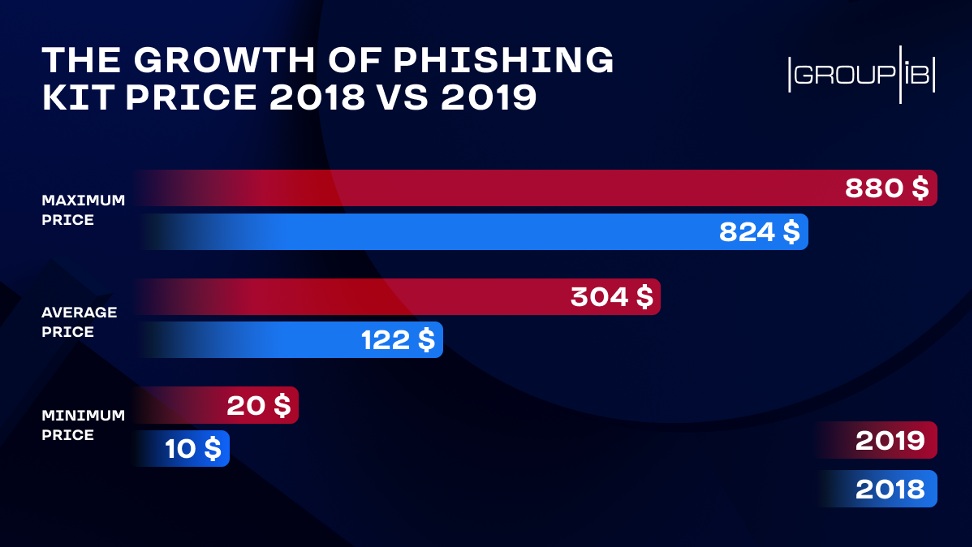
  • In 2019, the average price of a phishing kit more than doubled compared to the year before and totaled $304, with the prices generally ranging between $20and $880.
  • In comparison, the prices for a phishing kit varied between $10and $824, while the average price stood at $122 in 2018.
Phishing kit statistic
Image Source: Group-IB

The researchers said the most remarkable gesture though was that some of the phishing kits were offered for free. This isn’t human generosity, but a possibility of backdoors hidden in these freebies, which would enable their creators unrestricted future access to all the exfiltrated data.

Group-IB CTO and Head of Threat Hunting Intelligence team Dmitry Volkov, said, “Phishing kit creators are the driving force of this criminal marketplace – one individual might be behind the creation of hundreds of phishing pages and, even worse, behind the compromise of the personal information of thousands of people. Therefore, the fight against phishing kit creators should be at the core of the struggle to eradicate phishing. In its practice, our team had several investigations that resulted in the deanonymization of phishing kit creators. By sharing such info with relevant law enforcers and ensuring the apprehension of cybercrooks, we seek to prevent the further spread of ‘disease’ and fight not against its symptoms – phishing pages, but against its causative agent – phishing kit makers.”

Equifax Settles Indiana Lawsuit Over Data Breach for $19.5 Mn

Equifax Settles Indiana Lawsuit Over Data Breach for $19.5 Mn

Atlanta-based consumer credit reporting agency Equifax has agreed to pay the State of Indiana $19.5 million to settle a class-action lawsuit, brought forward by the State’s Attorney General Curtis Hill.  The lawsuit concerns the 2017 data breach that leaked a massive amount of data of more than 147 million Americans, including 3.9 million Indiana residents. The lawsuit claimed that Equifax failed to protect its residents’ social security numbers and other private information. As per the settlement, Equifax is also required to correct Indiana’s security deficiencies and safeguard consumer information in the future.

Indiana and Massachusetts are the two states that did not participate in a multistate settlement in July 2019 that announced up to a $700 million settlement with the U.S. Federal Trade Commission, Consumer Financial Protection Bureau, and 50 states and territories.

Overview of the Data Breach

In September 2017, Equifax disclosed that its databases were hacked between May and June 2017, and attackers gained access to the company’s data that compromised sensitive information for 147 million American consumers, including social security numbers, credit card numbers, and driver’s license numbers. Equifax discovered the breach on July 29, 2017, but waited until after the close of trading nearly six weeks later to disclose the breach to its consumers and investors, after hackers exfiltrated data for 76 days.

A Series of Lawsuits

Equifax recently settled similar claims with the U.S. Federal Trade Commission. As per the settlement, Equifax will pay $380.5 million as a penalty from where the class action members can withdraw up to $20,000 as compensation. Additionally, the company may also require spending $125 million for out-of-pocket claims. Class action members will also receive 10 years of free credit monitoring services from Equifax.

Also, earlier, in September 2018, Equifax was charged with a fine of £500,000 (US$660,000) by the Information Commissioner Office (ICO) for failing to protect the personal and financial data of customers.  The ICO, which carried out the investigation, stated that the U.S. Department of Homeland Security warned Equifax about the vulnerabilities in its systems, in 2017. However, Equifax failed to take proper steps to fix the vulnerabilities.

Australian Cyber Security Centre Issues Guidelines for Home Workers

Remote Security Policy, Remote Work Jeopardizes Corporate Network Security: Report

Amid the COVID-19 pandemic, more employees in Australia are opting for self-isolation and choosing to work from home. But there are concerns about these users falling victims to phishing attacks. To protect users, the Australian Cyber Security Centre (ACSC) issued a new advisory containing tips to reduce the risks of phishing attacks and protect users from cyberattacks.

ACSC Head, Abigail Bradshaw CSC, said the dramatic increase in people working from home – many of them for the first time, and the increasing use of online systems to manage social distancing – creates opportunities for cybercriminals.

“The social distancing measures that help protect the community against COVID-19 can also make them more vulnerable to malicious cybercriminals,” said Bradshaw. “The unauthorized compromise of information can have a devastating impact on a person’s emotional, financial and working life.”

The ACSC’s new guidance outlines nine important but simple cybersecurity practices for people who are working from home to limit risks:

  • Beware of scams
  • Use strong unique passphrases
  • Implement multi-factor authentication
  • Update your software and operating systems
  • Use a virtual private network (VPN)
  • Use trusted Wi-Fi
  • Secure your devices when not in use
  • Avoid portable storage devices
  • Use trusted sources of information

The advice is part of the ACSC’s campaign to raise awareness of cyber threats and how to mitigate them during the COVID-19 pandemic.

Earlier this month, the government of Australia launched a cyber offence against offshore cybercriminals. In an official statement, Minister for Defense Linda Reynolds stated that the Australian Signals Directorate (ASD) has mobilized its offensive cyber capabilities to disrupt the cybercriminals behind the spate of Coronavirus-related attacks and malicious activities.

It’s said that cyber experts from ASD are tracking down state and foreign hackers who are targeting Australian households and businesses through devious scams and malicious websites.


Connected Cars From Ford and Volkswagen Have Security Flaws: Report

Connected Cars From Ford and Volkswagen Have Security Flaws: Report

Connected cars manufactured by Ford and Volkswagen have major security flaws which could put owners’ privacy and safety at risk, a new research found. An investigation from consumer group Which? exposed vulnerabilities in connected technology like media and computer systems in Ford Titanium Automatic 1.0L petrol and a Volkswagen Polo SEL TSI Manual 1.0L petrol car models.

Which? Magazine stated that it found vulnerabilities in a section of the car that can enable or disable traction control, a feature that helps drivers to control the vehicle, and in the infotainment unit that holds owner’s personal data, such as people’s phone contacts or location history. It also claimed that it was able to hack the infotainment system in the Volkswagen Polo.

The investigation also revealed that by lifting the Volkswagen badge on the front of the car gave them access to the front radar module. This could potentially allow an attacker to tamper with the collision-warning system, posing a safety risk. Which? warned that the security flaws expose the cars to malicious hackers who could steal data or send misleading information to the vehicle’s management system.

Lisa Barber, Editor of Which? Magazine, said, “Most cars now contain powerful computer systems, yet a glaring lack of regulation of these systems means they could be left wide open to attack by hackers – putting drivers’ safety and personal data at risk. The government should be working to ensure that appropriate security is built into the design of cars and put an end to a deeply flawed system of manufacturers marking their own homework on tech security.”

Connected Cars are Vulnerable to Attacks

A similar study by Consumer Watchdog, a non-profit organization, revealed that all advanced cars with internet connections to their safety-critical systems are apparently vulnerable to fleet-wide hacks. The survey report, “Kill Switch: Why Connected Cars Can Be Killing Machines And How To Turn Them Off”, revealed that automakers have disclosed the high risk of such hacks to their investors, but are keeping the public in the dark as they market new features based on internet connections.

According to the report, the infotainment system is connected to the internet through a cellular connection, and also to the vehicle’s CAN (Controller Area Network) buses. This outdated 1980s era technology links the vehicle’s most critical systems, such as the engine and the brakes. Experts agree that connecting safety-critical components to the internet through a complex information and entertainment device is a security flaw. This design allows hackers to control a vehicle’s operations and take it over from across the internet.

Security Tools to Identify Flaws in Connected Cars

Earlier, Cisco released an open-source hardware tool dubbed “4CAN” to find security vulnerabilities in connected cars. The newly launched security tool will allow automobile security researchers and car manufacturers to identify potential flaws in sensors and control systems in modern cars, to ensure vehicle security. Cisco stated that vulnerabilities in the control systems might cause serious threats in the cars, which allows attackers to get control of the vehicle’s system.