
Most American adults are concerned about how the government and private organizations use their personal information, an online survey by the Pew Research Center revealed. More than half (52%) of adults in the U.S. stated that they feel their personal data is less secure and decided not to use a product or service over privacy and security concerns. Some are also worried about how much personal information would be collected about them when they make purchases.
The survey which was conducted between June 3 – 17, 2019, also found the role of education and income as factors in determining consumer privacy concerns. Nearly 55% of college graduates and adults with some college education stated they have decided not to use a product or service due to privacy concerns, compared with 45% of those with high school education. And 54% of adults with an annual income of $75,000 or more annually shared this concern, compared with 48% of those who make $30,000 or less.
It was also found that people who had fallen victim to a data breach in the last 12 months were much more inclined to take security steps to keep their personal information secure.
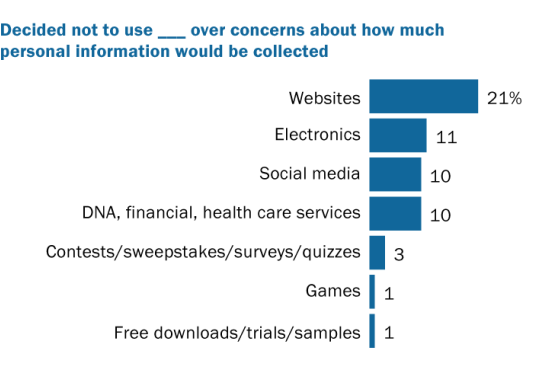
The survey included a set of questions for the respondents, such as a recent situation where they decided to not use a product or service over privacy concerns.- One-in-five Americans (21%) said they decided not to use particular websites as they felt it unsecure.
Around 11% said they decided not to use certain electronics. And some stated they avoided social media or specific services such as DNA ancestry kits, financial tools or health care.
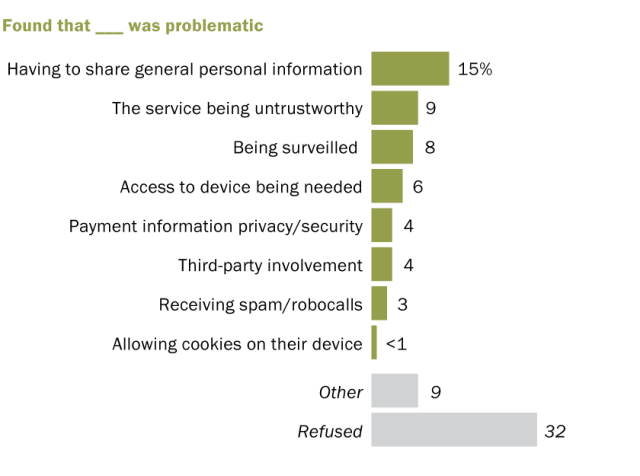
Apart from these, the most mentioned concern was that they must share personal information (15%) in order to get access to the product or service. The second largest concern was that the product or service is untrustworthy (9%). And 8% cited surveillance as one of the many concerns such as giving payment information, potential third-party involvement, and the risk of scams.